Cart
0

Table of Contents
- Why Luxury Fabrics Need a Different Care Routine
- How to Read Care Labels on Delicate Fabrics
- How to Care for Silk Clothing
- How to Wash Cashmere Without Ruining It
- How to Dry Clean Delicate Clothes at Home
- How to Store Luxury Clothing Between Seasons
- Emergency Stain Response for Luxury Fabrics
- Conclusion
- Frequently Asked Questions
Last Updated: October 5, 2026
Why Luxury Fabrics Need a Different Care Routine
Learning how to care for luxury fabrics starts with one truth: these materials do not forgive rough handling. Silk, cashmere, and velvet are built from fine fibers with delicate weaves. A hot wash or a harsh detergent can shrink, pill, or dull them in a single cycle.
At Urban Mode Wear Store, we hear the same worry from shoppers who spend real money on quality pieces. They want their investment to last. The good news is that a simple care routine, done right, keeps luxury fabrics looking new for years.
Most fabric damage comes down to three things: heat, friction, and the wrong cleaning products. Control those, and you control the outcome. This guide walks you through care labels, hand-washing, drying, storage, and stain response, one fabric at a time.
Key Takeaway
The single biggest upgrade to any care routine is reading the care label before the first wash, not after something goes wrong.
How to Read Care Labels on Delicate Fabrics
A care label is the manufacturer's instruction manual, and it overrules every general tip you read online. The symbols follow a standard set by ASTM International care labeling standards, so they mean the same thing on every garment.
Here is how to decode the most common symbols:
- Washtub with a number: Maximum water temperature in Celsius. A washtub with a hand inside means hand-wash only.
- Triangle: Bleach. A crossed-out triangle means no bleach at all.
- Square with a circle: Tumble dry. A crossed-out version means air dry only.
- Iron with dots: One dot is low heat, two is medium, three is high.
- Circle: Professional dry cleaning. Letters inside tell the cleaner which solvent to use.
When a label says "dry clean only," believe it. That rule exists because the fabric, the lining, or the trim cannot survive water.
Pro Tip
Photograph the care label the day you buy a piece and save it in a phone album. Tags fade, fray, and get cut out, but the photo lasts as long as the garment.
How to Care for Silk Clothing
Silk is stronger than it looks, but it stains with water and loses shine with the wrong soap. Hand-washing is the safest route for most silk pieces.
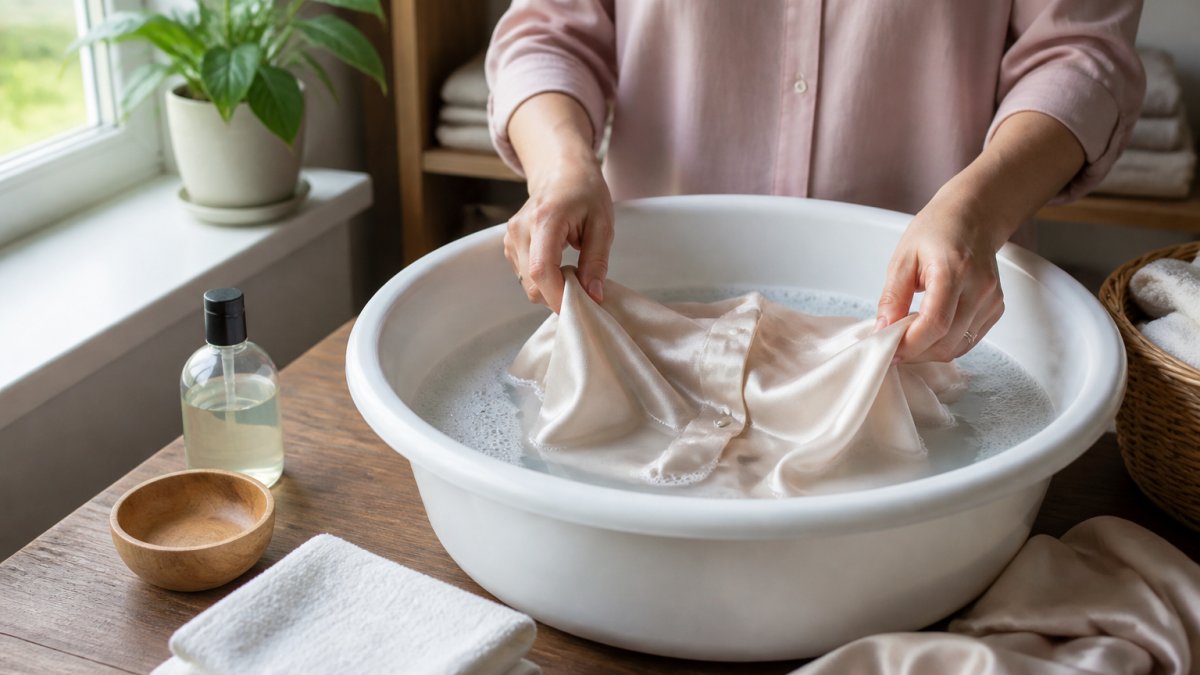
Follow these steps:
- Fill a basin with cool water and a capful of gentle detergent.
- Submerge the garment and swirl it for two to three minutes. Do not scrub.
- Rinse in cool water until no suds remain.
- Press water out against the basin wall. Never wring or twist.
- Roll the piece in a white towel to absorb excess moisture.
- Hang to air dry away from direct sun.
Skip the dryer entirely. Heat sets wrinkles and can scorch silk fibers.
How to Wash Cashmere Without Ruining It
Cashmere needs cool water, a gentle detergent, and almost no agitation. Hot water and friction cause the fibers to lock together, which leads to shrinkage and pilling.
The hand-wash method:
- Soak the garment in lukewarm water with a small amount of gentle detergent for ten minutes.
- Gently squeeze suds through the fabric. Do not rub.
- Rinse in cool water.
- Press out water, then roll in a towel.
- Lay flat on a dry towel and reshape by hand.
Never hang wet cashmere. The weight of the water stretches the shoulders and hem out of shape.
Watch Out
Putting cashmere in a warm dryer is the fastest way to shrink a sweater by two sizes. Once the fibers felt together, that damage cannot be reversed.
How to Dry Clean Delicate Clothes at Home
You cannot truly dry clean at home, because professional dry cleaning uses solvents that are not sold for home use. What you can do is a gentle home cleaning that handles light soil and odor between professional visits.
Women Clothing Summer Satin Shirt Women Light Luxury Satin Artificial Silk →
A simple at-home refresh:
- Spot treat small marks with a damp white cloth and a drop of gentle detergent.
- Steam the garment to lift wrinkles and kill odor.
- Air it outside in the shade for an hour.
- Use a soft clothing brush on wool and velvet to lift dust.
For structured pieces like coats, tailored blouses, and lined garments, hand the job to a professional. Home methods cannot press a sharp crease or clean a lining properly.
When to Stop DIY Care and Call a Specialist
Some garments carry risks that home methods cannot safely manage. Use this checklist before you attempt any at-home cleaning:
- Unstable dyes: If the label warns about color transfer or the fabric bleeds when blotted with a damp white cloth, stop. Water or solvent can shift dye unevenly.
- Embellishments: Beads, sequins, embroidery, and appliqués can loosen or melt. A specialist can clean around them or remove and reattach them.
- Lining and interlining: A lined jacket or coat has multiple layers that can shrink at different rates. Home washing can pucker the outer fabric while the lining stays put.
- Vintage or antique pieces: Older fabrics may have weakened fibers, fragile seams, or previous repairs. A conservator or experienced dry cleaner can assess condition before cleaning.
- Persistent stains: If a stain does not lift after one gentle attempt, stop. Repeated rubbing can spread the mark, abrade the weave, or set the stain permanently.
- Structural pieces: Tailored jackets, pleated skirts, and garments with shoulder pads need pressing equipment and shaping forms that home setups lack.
Watch Out
If you are unsure whether a garment can survive home care, test a hidden area first, inside a hem or seam allowance, with the same product and method you plan to use. If the color shifts, the fabric pills, or the texture changes, do not proceed.
How to Store Luxury Clothing Between Seasons
Storage protects fabric from the two things that ruin it fastest: moisture and pests. Clean every piece before it goes away. Stains you cannot see attract moths and set over time.
Preparing Garments for Storage
- Clean everything first. Even invisible perspiration, food, or beverage residue attracts insects and can oxidize into permanent stains over months.
- Repair before storing. Fix loose buttons, open seams, and small tears so they do not worsen while packed away.
- Remove dry cleaning bags. Plastic covers trap moisture and solvent fumes. Replace them with breathable cotton or canvas garment bags.
- Empty pockets and remove belts. Stored items can crease around forgotten objects, and leather belts can transfer dye.
Controlling Humidity and Temperature
- Aim for a cool, dry space with stable conditions. A common target is 60-70°F with relative humidity around 45-55%. Avoid attics, basements, and bathrooms, where swings in temperature and moisture are common.
- Use a dehumidifier or silica gel packets in damp climates. Replace or recharge them as directed.
- Keep storage away from exterior walls, which can wick moisture and cause mildew.
- Avoid direct sunlight and heat vents. UV light fades dyes and weakens fibers; heat can bake in creases.
Preventing Pest Damage
- Cedar blocks or cedar-lined closets deter moths, but cedar oil loses potency over time. Lightly sand the wood or refresh with cedar oil annually.
- Lavender sachets add a secondary deterrent and a pleasant scent. Replace them when the fragrance fades.
- Mothballs contain pesticides and are not recommended for garments worn against the skin or for households with children or pets. If you use them, keep them in a sealed container away from direct fabric contact.
- Inspect before storing. Look for small holes, webbing, or live insects along seams, under collars, and in folds. If you find activity, isolate the garment and clean it professionally before storing it with other pieces.
- Check stored items once a season. A quick look catches pests and moisture damage early.
Folding and Hanging by Fabric
- Knits (wool, cashmere): Fold flat and stack loosely. Hanging stretches shoulders and hem.
- Structured pieces (jackets, coats): Hang on padded hangers to hold shoulder shape. Use a breathable garment bag.
- Silk and delicate blouses: Hang on padded or velvet hangers to prevent slipping and shoulder marks.
- Velvet: Hang to avoid crushing the pile. If you must fold, pad the fold with acid-free tissue.
- Linen: Hang or roll to minimize sharp creases, which can become permanent over time.
Pro Tip
Photograph each stored garment and note its location. When the season changes, you will know exactly what you have and where it is, and you can spot any damage before it spreads.
Emergency Stain Response for Luxury Fabrics
Fast action saves most stains, but the wrong move makes them permanent. Blot, never rub, and work from the outside of the stain inward.
| Stain | First Move | Avoid |
|---|---|---|
| Red wine | Blot, then dab with cool water | Hot water, rubbing |
| Grease | Sprinkle cornstarch, wait, brush off | Water on silk |
| Coffee | Blot, dab with mild detergent | Scrubbing the weave |
| Ink | Blot, take to a specialist | Alcohol on silk |
| Perfume | Dab with cool water | Heat of any kind |
If a stain does not lift after one gentle attempt, stop. Keep working it and you risk spreading the mark or damaging the fibers.
Best For
Delicate pieces with set-in stains, structured coats, and anything labeled dry clean only. These belong with a specialist, not a home remedy.
Conclusion
Caring for luxury fabrics comes down to patience and the right habits. Cool water, gentle detergent, air drying, and smart storage keep silk, cashmere, and velvet in rotation for years instead of months.
At Urban Mode Wear Store, we build our collection around premium materials and flattering fits, so the pieces you invest in are worth the care. Our satin blouses and tops bring that same polish to workdays and weekends alike. Browse our guide to building a timeless wardrobe and see how far a little care goes.

Frequently Asked Questions
How do you wash delicate luxury fabrics at home?
Hand-wash most luxury fabrics in cool water with a gentle detergent made for delicates. Submerge the garment, gently squeeze suds through the fabric without rubbing or wringing, then rinse in cool water until no soap remains. Roll the item in a clean towel to remove excess moisture, reshape it flat, and let it air dry away from direct sunlight or heat. Always check the care label first, because some fabrics like velvet or structured wool require professional dry cleaning instead.
Should luxury fabrics go in the washing machine?
Some can, but only on a delicate or hand-wash cycle with cold water and a mesh laundry bag. Silk, cashmere, and satin polyester often survive a gentle machine cycle, while velvet, brocade, and embellished pieces should never go in the drum. When in doubt, hand-wash or dry clean. Machine agitation causes friction that leads to pilling, shrinkage, and color transfer, which are the most common reasons luxury garments lose their shape and sheen.
How often should you clean luxury clothing?
Clean only when needed. Wool, cashmere, and silk naturally resist odors and can be worn several times between washes if aired out after each wear. Spot-treat small stains right away rather than washing the whole garment. Over-cleaning is one of the biggest causes of fabric damage, fading, and pilling. For pieces worn against the skin, a wash every two to three wears is usually enough. Outerwear like coats may only need cleaning once or twice a season.
When should you stop DIY care and consult a specialist?
Call a professional dry cleaner for structured garments, heavily embellished pieces, vintage items, or any stain you cannot identify. Velvet, brocade, leather trim, and garments with beading or sequins are risky to handle at home because water can crush the pile or loosen adhesives. If a stain has set for more than a few days, or if the fabric has already changed texture or color, a specialist has a better chance of recovery than a home treatment will.
The challenge with quality clothing is not buying it. It is keeping it looking new. Urban Mode Wear Store makes that easier with premium materials, plus-size friendly fits, and timeless designs built to last. Add to Cart and start building a wardrobe that earns its place.