

Cart
0

Last Updated: November 21, 2026
Quick Summary
Sustainable denim brands are worth choosing because cheap jeans often lose shape, fade and tear within a season or two. Judge them by verified fiber content, specific certifications, and how long the pair lasts, not by vague eco claims.
- Fiber content must be disclosed on garment labels, so check the product page for a percentage breakdown.
- Certifications only cover their stated scope; GOTS covers the whole garment, while OEKO-TEX tests only for harmful substances.
- Verify a certification by searching the certifier's public database for the license or certificate number.
- Compare cost per wear: a $20 pair worn 60 times costs about 33 cents per wear.
- Wash in cold water inside out, tumble dry on low, and repair small damage early to extend a pair's life.
Which sustainable jeans fit your wardrobe?Urban Mode Wear Store offers sustainable jeans in fitted, flare and skinny styles.
Shop Sustainable Denim
Table of Contents
- Why Fast Fashion Denim Wears Out Fast
- How to Judge a Sustainable Denim Brand Without Falling for Vague Claims
- Sustainable Denim Fabric: Recycled Cotton, Organic Cotton and Blends
- Affordable Non-Fast-Fashion Clothing Brands and What Price Actually Buys
- Urban Mode Wear's Sustainable Jeans Compared
- Finding Your Fit: Sizing, Rise and Body-Shape Guidance
- Making Your Pair Last: Care, Repair and End-of-Life Options
- Frequently Asked Questions
Why Fast Fashion Denim Wears Out Fast
Sustainable denim brands are worth a closer look because cheap jeans often lose their shape, fade and tear within a season or two. Comparing sustainable denim brands on durability matters, because cheap jeans can stop fitting well after a few months of wear and washing.
The cause usually comes down to fabric weight, stitching and finishing. A Federal Trade Commission guidance on textile labeling explains how fiber content must be disclosed on garment labels, which is a useful starting point when you compare fabrics.
Repeated washing and drying can also break down stretch fibers over time.
How to Judge a Sustainable Denim Brand Without Falling for Vague Claims
Words like "eco-friendly" and "conscious" appear on many labels, but they do not tell you much on their own. The useful skill is separating a verified claim from a marketing phrase, and that means knowing which certifications exist, what each one actually covers, and where to check it.
Start with the fiber, then the certificate
A product page should state fiber content as a percentage. A Federal Trade Commission guidance on textile labeling explains that fiber content must be disclosed on garment labels, so the label and the product page should agree. If a brand says "organic cotton" but the label lists a cotton-polyester blend with no percentage breakdown, treat the claim as unverified.
Certifications worth recognizing
A certification is only useful if you know its scope. These are the ones most commonly cited on denim product pages:
- Global Organic Textile Standard (GOTS): covers organic fiber content plus processing, social, and environmental criteria across the supply chain. It applies to the whole garment, not just the cotton.
- Organic Content Standard (OCS): verifies the presence and amount of organic material in a product. It tracks content, but it does not certify the processing or labor standards the way GOTS does.
- Global Recycled Standard (GRS): verifies recycled content and adds social, environmental, and chemical requirements for the recycled portion.
- Recycled Claim Standard (RCS): verifies recycled content only, without the broader processing and social criteria of GRS.
- bluesign: focuses on chemical management and input safety in textile production rather than fiber origin.
- OEKO-TEX Standard 100: tests finished articles for harmful substances. It says nothing about organic fiber or labor conditions.
- Fair Trade Certified: focuses on worker conditions and community premiums at certified facilities.
- Leather Working Group and similar schemes: not relevant to cotton denim, but useful context when a brand also sells leather goods.
A common pattern is a brand listing three or four logos on a single product page. Check whether each certification applies to the specific garment or only to a fabric the brand uses somewhere in its line. A certification that covers one fabric is not a certification of the pair you are buying.
How to verify a claim in about five minutes
- Open the product page and find the fiber breakdown. If it is missing, that is a signal.
- Look for a certification name and a license or certificate number, not just a logo.
- Search the certifier's public database for that number. GOTS, GRS, RCS, and OEKO-TEX all maintain searchable registries.
- Check the brand's supply-chain page for named factories or a tiered supplier list. Named facilities are easier to audit than a general statement about "partner factories."
- Compare the care label with the sustainability story. A pair marketed on low-impact production but labeled for hot wash and high-heat drying undercuts its own claim.
Watch out: a logo with no certificate number, or a certification that covers only a trim or a thread, is the most common way a vague claim survives scrutiny.
What "sustainable" cannot tell you
No single attribute makes a pair of jeans fully sustainable. Organic cotton can still be dyed with high-impact processes, and a recycled fiber can be blended with virgin elastane that shortens the garment's life. The practical approach is to weigh fiber, certification, construction, and care together, and to treat any brand that reduces the question to one label with caution.
A brand that answers these questions in plain language, with certificate numbers and named suppliers, is generally easier to trust than one that relies on broad statements. If a brand cannot point to the material breakdown on the product page and the care instructions on the label, the claim is not yet evidence.
Sustainable Denim Fabric: Recycled Cotton, Organic Cotton and Blends
Each fabric type has trade-offs. Recycled cotton reuses existing textile fiber, which can reduce the demand for new raw material. Organic cotton is grown without synthetic pesticides, though it does not by itself guarantee that the rest of the production process is low-impact.
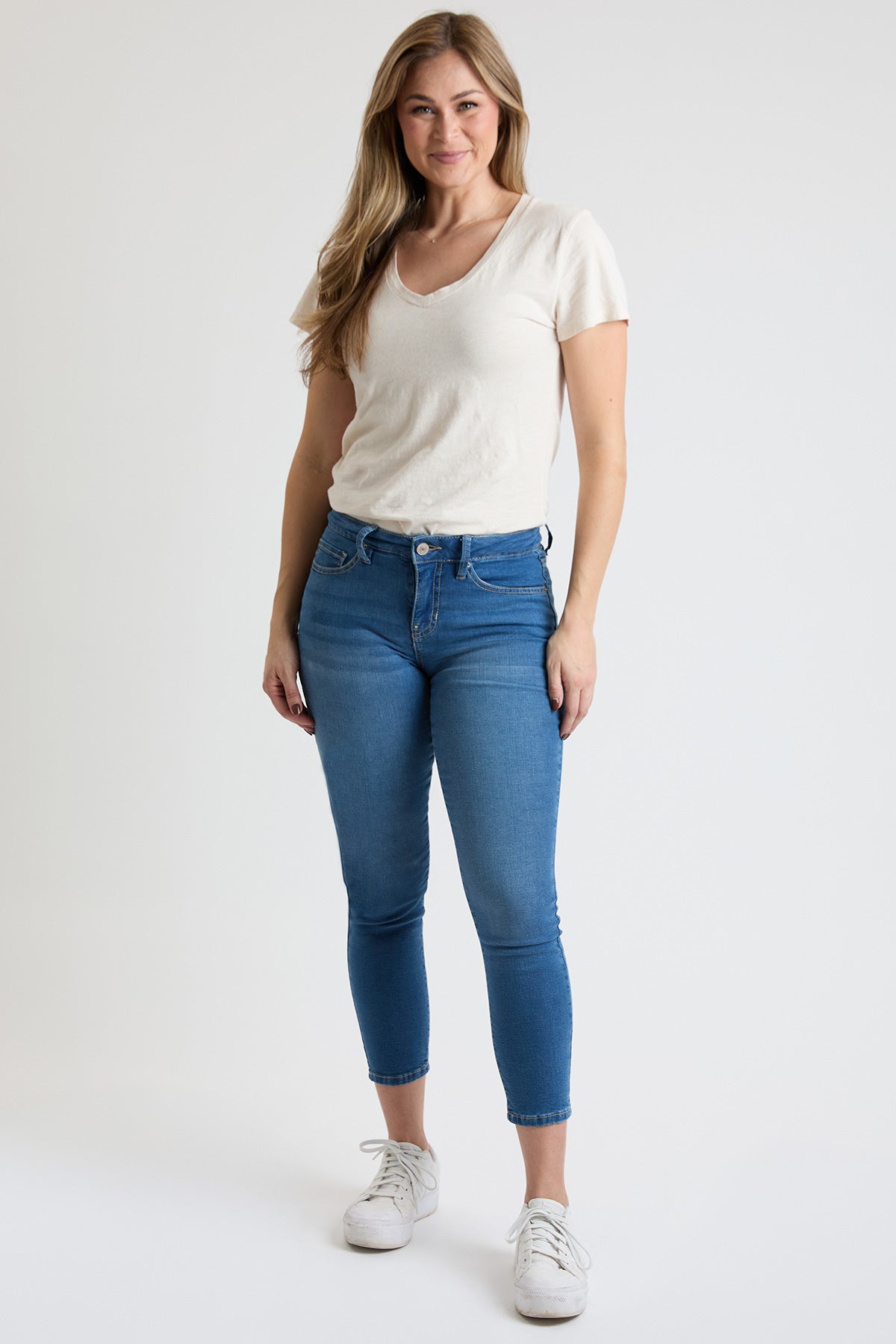
Blends are common in denim because they add stretch and recovery. The Urban Mode Wear Store Women's Petite Sustainable High Rise Skinny Jeans, for example, are made from 69% cotton, 26% polyester, 3% other fiber and 2% Lycra.
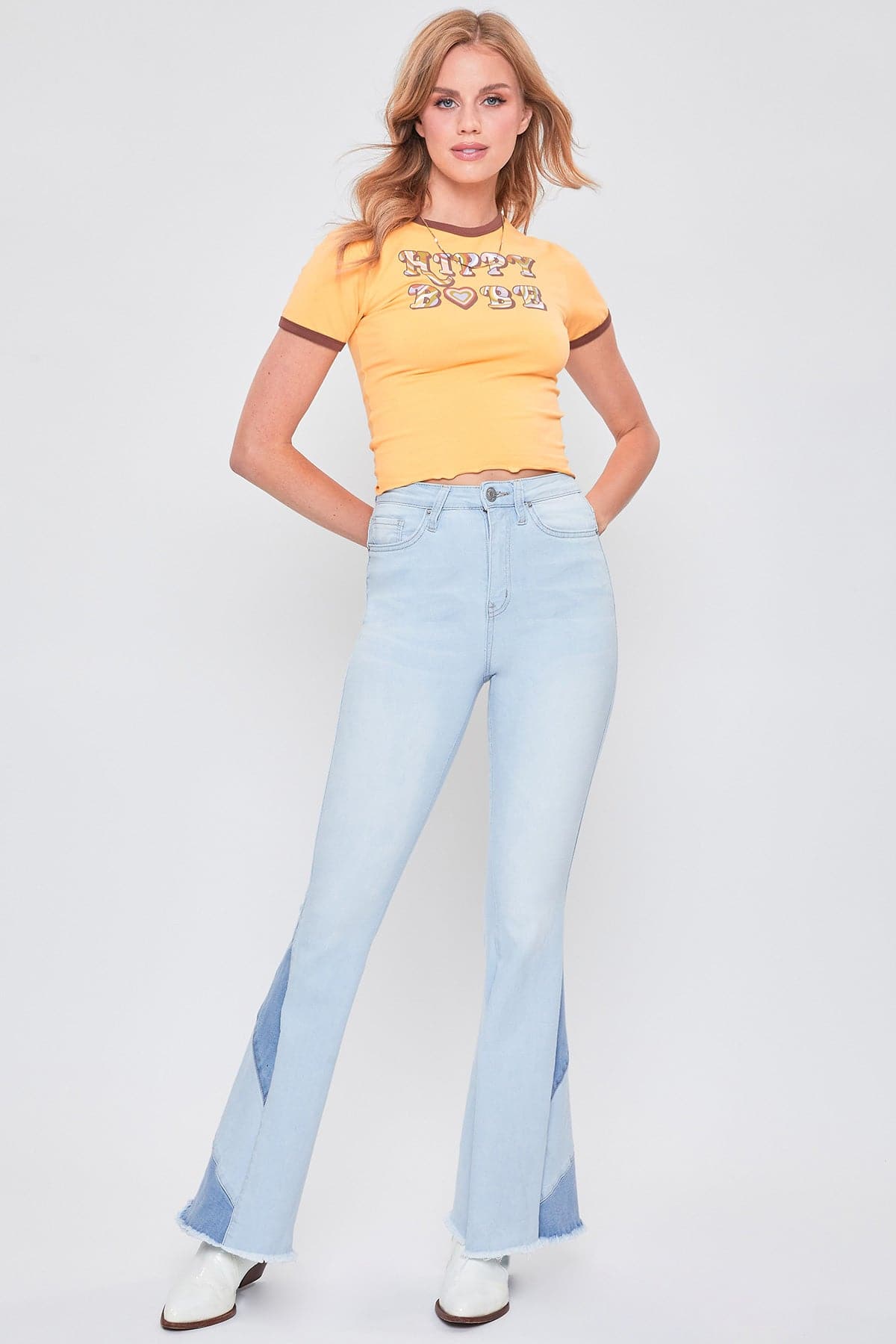
The Women's Sustainable Block Panel Flare Jeans are priced at $19.99. They use a blend of 74% cotton, 21% polyester, 3% viscose and 2% Lycra.
Affordable Non-Fast-Fashion Clothing Brands and What Price Actually Buys
Price is a rough guide, not a verdict. A higher price can reflect better materials and construction, but it can also reflect branding. The useful question is how many times you will wear a pair before it wears out.
Cost per wear is the simplest way to compare. A $15 pair worn 10 times costs $1.50 per wear. A $20 pair worn 60 times costs about 33 cents per wear. The math favors the pair that lasts.
The Urban Mode Wear Store Girls Sustainable WannaBettaFit 3-Button Skinny Jeans cost $15.00 and are made with recycled fibers, with a 74% cotton, 21% polyester, 3% viscose and 2% spandex blend.
Best for: shoppers who want to test a sustainable fit before spending more.
Urban Mode Wear's Sustainable Jeans Compared
Here is how the three Urban Mode Wear Store jeans compare side by side:
| Style | Price | Fiber content | Rise | Best for |
|---|---|---|---|---|
| Women's Petite Sustainable High Rise Skinny Jeans | $15.00 | 69% cotton, 26% polyester, 3% other, 2% Lycra | High | Fitted, polished looks |
| Women's Sustainable Block Panel Flare Jeans | $19.99 | 74% cotton, 21% polyester, 3% viscose, 2% Lycra | High | Retro, flare silhouettes |
| Girls Sustainable WannaBettaFit 3-Button Skinny Jeans | $15.00 | 74% cotton, 21% polyester, 3% viscose, 2% spandex | Mid | Everyday casual wear |
Price
Women's Petite Sustainable High Rise Skinny Jeans $15.00
Women's Sustainable Block Panel Flare Jeans $19.99
Girls Sustainable WannaBettaFit 3-Button Skinny Jeans $15.00
The Women's Petite Sustainable High Rise Skinny Jeans, priced at $15.00, feature built-in tummy control panels and a fitted hip-to-hem silhouette. They suit a loose blouse and heels for a dressier look, or a tee and sneakers for casual days.
The Women's Sustainable Block Panel Flare Jeans, at $19.99, offer a fit-and-flare shape with block panel detailing. They can be paired with a denim jacket for a denim-on-denim look.
The Girls Sustainable WannaBettaFit 3-Button Skinny Jeans, at $15.00, feature a mid-rise cut, light whiskering and light distressing.
Finding Your Fit: Sizing, Rise and Body-Shape Guidance
Fit depends on rise, inseam and leg opening as much as on the waist size. The product pages list measurements for a reference size, so compare those numbers with a pair of jeans that already fits you.
For the Women's Petite Sustainable High Rise Skinny Jeans, the listed size and fit based on size 6P shows a 27-inch inseam, a 10-inch rise and an 11-inch leg opening. For the Block Panel Flare Jeans, based on size 5, the inseam is 34 inches, the rise is 11 inches and the leg opening is 30 inches.
Measure your waist and hips, then compare them with the size chart before you order. If you sit between two sizes, the rise and leg opening are often the deciding factors for comfort.
Making Your Pair Last: Care, Repair and End-of-Life Options
Care has a bigger effect on longevity than most shoppers expect, and it is the part of sustainable denim that costs nothing extra. All three Urban Mode Wear Store jeans are labeled for machine washing in cold water and tumble drying on low, which is a reasonable baseline.
Wash less, and wash cold
Spot-clean small marks with a damp cloth and air the pair between wears. When you do wash, turn them inside out, use cold water, and choose a gentle cycle with like colors.
The product listings recommend tumble drying on low. Hang the pair to dry when you can, and if you use a dryer, keep it on low.
Repair the damage that actually happens
The failures that end a pair's life are predictable, and most are fixable at home or by a local tailor:
- Blown-out knees and thigh rub: a patch applied from the inside, stitched around the edges, adds years to a workwear-style pair. Denim repair specialists and many tailors offer this as a standard service.
- Frayed hems: a simple re-hem or a folded cuff stitch restores the length and prevents further unraveling.
- Loose or missing buttons: a replacement button and a few minutes with a needle restore the pair.
- Split back pockets or seam pulls: a tailor can reinforce the seam before it becomes a hole.
- Broken zippers: a zipper replacement is usually cheaper than a new pair and keeps the denim in rotation.
Resale and recycling
When a pair no longer fits, resale is the highest-value end-of-life option. Donated denim should be clean and dry; charities generally cannot process stained or torn items.
For pairs that are truly worn out, textile recycling is the alternative to the trash. Check what your local waste authority accepts before bagging the pair, since collection rules vary by area.
The habit that matters most
Keeping a pair in regular rotation, rather than wearing it daily, slows wear at the stress points. That habit, combined with cold washing, air drying, and a timely repair, is what makes sustainable denim pay off. A pair that lasts three years instead of one changes the cost-per-wear math far more than any single label on the waistband.
Choosing sustainable denim is a practical decision as much as an ethical one. Browse the Urban Mode Wear Store collection to find the fit, rise and fabric blend that suits your wardrobe, and start with a pair you will reach for every week.
Frequently Asked Questions
What are the most sustainable denim brands?
The most credible sustainable denim brands publish their fabric content, production partners and third-party certifications rather than relying on general eco language. Look for recycled or organic cotton disclosed by percentage, and for brands that name the mills or factories that cut and sew their jeans. The Women's Sustainable Block Panel Flare Jeans list their composition at 74% cotton, 21% polyester, 3% viscose and 2% lycra. Compare any brand against that level of disclosure before deciding.
What brands are not fast fashion but affordable?
Affordable non-fast-fashion brands tend to produce in smaller runs and use more durable construction, which keeps prices modest without rapid turnover. At Urban Mode Wear, the Girls Sustainable WannaBettaFit 3-Button Skinny Jeans start at $15.00 and the Women's Petite Sustainable High Rise Skinny Jeans start at $15.00. Judge affordability by cost per wear rather than sticker price alone.
How can you tell whether a denim brand is sustainable?
Check the fabric composition first, then whether the brand discloses where and how its jeans are made. Recycled and organic cotton content should be stated as a percentage, and production partners should be named. Be wary of terms like 'eco-friendly' with no supporting detail. Urban Mode Wear's sustainable jeans state their fiber blends in the product listing, so you can verify the composition yourself before buying.
Are sustainable jeans worth the higher price?
Sustainable jeans are worth it when they last longer and fit well enough to wear often. Compare cost per wear rather than sticker price. The Women's Sustainable Block Panel Flare Jeans start at $19.99, and the Women's Petite Sustainable High Rise Skinny Jeans start at $15.00. Pairs you rarely wear cost more per use, regardless of how they are made.


