Cart
0
Last Updated: November 1, 2026
Quick Summary
Rigid vs stretch denim comes down to fiber content: rigid denim is cotton-heavy with little or no elastic fiber, so it holds shape but needs breaking in, while stretch denim adds elastane for immediate comfort and movement. Rigid suits structured, classic fits, and stretch suits long sitting or active days.
- Rigid denim is woven from cotton or a cotton-heavy blend with little or no elastic fiber.
- Rigid denim feels firm at first and can take several wears to soften to your body.
- Stretch denim adds a small amount of elastane or spandex so it recovers after bending or sitting.
- Heat from hot water and high-heat drying is the fastest way to weaken elastane in stretch denim.
- A jean with 1% to 2% elastane usually holds its shape longer than one with 3% to 5%.
Table of Contents
- Rigid vs Stretch Denim: The Core Difference
- Quick Comparison: Rigid and Stretch Denim at a Glance
- 100% Cotton Jeans vs Stretch Jeans: Fabric Composition and Comfort
- Rigid Denim Fit: What to Expect Through the Day
- Stretch Denim Durability: Shape Retention and Wear Life
- How to Find Jeans That Do Not Stretch Out
- Choosing Your Everyday Pair From the Urban Mode Wear Collection
- Frequently Asked Questions
Rigid vs Stretch Denim: The Core Difference
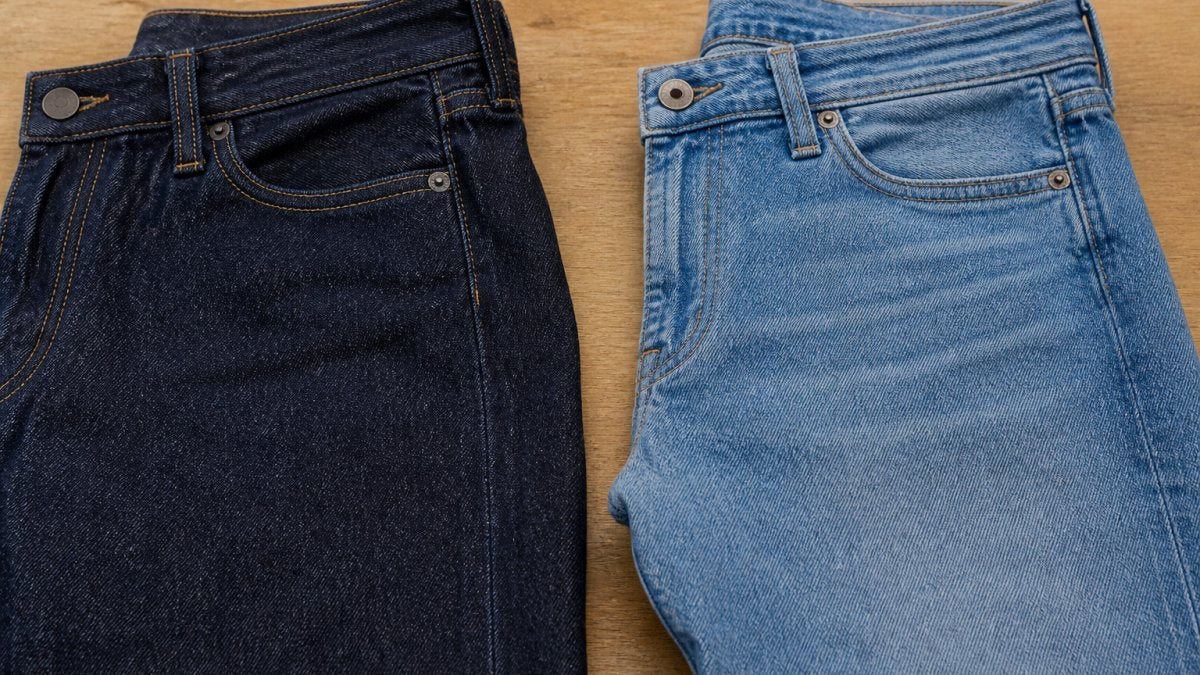
Rigid denim is woven from cotton or a cotton-heavy blend with little or no elastic fiber. It holds a crisp shape and breaks in over time, which is the core of the rigid vs stretch denim decision. Stretch denim adds a small amount of elastane or spandex, which lets the fabric recover after you bend, sit, or reach.
The practical difference shows up in the first hour of wear. Rigid denim feels firm and sometimes stiff, and it can take several wears before it softens to your body. Stretch denim feels comfortable right away, though it can lose its shape if the elastic fiber breaks down over time.
Neither fabric is better in every case. Rigid denim suits people who want a structured look and a classic fit. Stretch denim suits people who sit for long stretches, move a lot, or simply want jeans that feel soft from the first wear.
Quick Comparison: Rigid and Stretch Denim at a Glance
| Feature | Rigid Denim | Stretch Denim |
|---|---|---|
| Main fiber | Cotton-rich, little or no elastane | Cotton with elastane or spandex |
| Comfort on day one | Firm, needs breaking in | Soft, flexible from the start |
| Shape retention | Holds shape well | Can stretch out over time |
| Movement | Limited give | Moves with you |
| Best for | Structured look, classic fit | All-day sitting, active routines |
Pros of rigid denim: Holds its shape, develops a personal fade over time, and suits a more traditional look.
Cons of rigid denim: Feels stiff at first, and it restricts movement more than stretch fabrics do.
Pros of stretch denim: Comfortable right away, easy to move in, and forgiving through a long day.
Cons of stretch denim: Can lose its shape with repeated wear and stretch out at the knee and seat.
100% Cotton Jeans vs Stretch Jeans: Fabric Composition and Comfort
Fabric composition is the clearest way to tell the two apart. A 100% cotton jean has no elastic fiber, so its comfort depends on how the fabric softens with wear. Stretch jeans blend cotton with a small amount of elastane, which adds give.
For stretch percentage and fabric weight, check the material composition in each product listing.
Rigid Denim Fit: What to Expect Through the Day
That changes how you should size and what you should expect across a full day.

Sizing rules that actually work.
- Buy your true waist measurement, not a smaller size. Rigid denim will not stretch to forgive a tight waistband. If the waist digs in when you sit, size up.
- Check the rise against how you sit. A high-rise rigid pair holds its line better through a long day of sitting than a low-rise pair, which can gap at the back waistband.
- Expect the seat and thighs to feel snug at first. That is normal. The fabric will mold to your shape over several wears, but it will not expand the way stretch denim does.
- Try the jeans on in the afternoon if you can. Bodies swell slightly through the day, and a rigid pair that feels comfortable at 4 p.m. is more likely to stay comfortable during real wear.
A concrete example. The Judy Blue Full Size High Waist Rigid Magic Heavy Destroy Straight Jeans pair a 100% cotton front panel with a straight leg and a high waist, for a structured silhouette.
Pro Tip
If you plan to sit for most of the day, size rigid denim for your seated waist measurement, not your standing one. A waistband that feels fine standing can cut in after two hours at a desk.
When rigid denim is the wrong choice. If you need jeans that feel soft from the first wear, or if your weight fluctuates through the month, rigid denim will feel less forgiving than a stretch pair. In that case, a low-stretch denim (around 1% to 2% elastane) gives you more day-to-day flexibility while keeping most of the structured look.
Judy Blue Full Size High Waist Rigid Magic Heavy Destroy Straight Jeans →
Stretch Denim Durability: Shape Retention and Wear Life
Stretch denim fails in a predictable order. The cotton body wears slowly, but the elastane or spandex fibers fatigue first. Once those elastic fibers lose recovery, the jeans bag at the knee, sag at the seat, and stop snapping back after you sit. Understanding why that happens lets you slow it down.
What actually breaks down stretch denim.
- Heat. Hot water and high-heat drying are the fastest way to weaken elastane. Repeated exposure to high dryer temperatures is a common cause of baggy knees and a stretched-out seat.
- Mechanical stress. Pulling jeans on by the waistband, stretching them over a chair, and wearing them several days in a row without a rest all accelerate fiber fatigue.
- Detergent residue. Heavy detergent use and fabric softener can coat elastic fibers and reduce their ability to recover.
A care routine that protects recovery.
- Wash cold, inside out. Cold water slows fiber fatigue and reduces indigo loss. Turn the jeans inside out to protect the outer surface and the seams.
- Skip fabric softener. Softener coats elastane and reduces its snap-back over time.
- Air dry when possible. If you must use a dryer, choose the lowest heat setting and remove the jeans while they are still slightly damp.
- Rest jeans between wears. Give stretch denim a day off between wearings so the elastic fibers can recover.
- Wash less often. Spot-clean and air out jeans between washes. Frequent washing is harder on stretch denim than on rigid denim.
What the care label tells you. The Women's Luxe High Rise WannaBettaButt Straight Jeans are listed as machine wash cold and tumble dry low.
Watch Out
High-heat drying is the single biggest cause of stretch denim losing its shape. If your jeans bag at the knee after a few months, check your dryer settings before you blame the fabric.
How stretch denim compares on wear life. Rigid denim generally outlasts stretch denim because it has no elastic fibers to fatigue. A well-cared-for rigid pair can hold its shape for years, while a stretch pair typically shows recovery loss sooner, especially at the knee and seat. The trade-off is comfort: stretch denim gives you ease of movement from day one, while rigid denim asks for a break-in period in exchange for longer shape retention.
Reading stretch percentage as a durability signal. A jean with 1% to 2% elastane usually holds its shape longer than one with 3% to 5%, because there is less elastic fiber to fatigue. To check a stretch denim's fabric and fit details, see the Mens Denim Stretch Plus Size Jeans Slim Casual. If longevity matters more than maximum stretch, choose the lower percentage and a denser fabric weight. A heavier stretch denim resists bagging better than a lightweight one, even at the same elastane content.
Key Takeaway
Stretch denim durability comes down to fiber fatigue, and heat is the main accelerant. Wash cold, air dry, rest jeans between wears, and choose a lower stretch percentage if you want the pair to keep its shape over years rather than months.
How to Find Jeans That Do Not Stretch Out
If shape retention matters most, look for three things: a higher cotton content, a lower stretch percentage, and a denser weave. Those features hold their shape longer than lightweight stretch fabrics.
Start by reading the material composition. A label with 98% or more cotton usually means little elastic recovery is needed, so the jeans keep their shape. Next, check the stated stretch level. Products listed as "no stretch" or "rigid" are the best choice for shape retention. The New Mens Light Blue Tapered Jeans are listed as no stretch with a regular thickness. For a non-stretch straight fit to compare against, see the Mens Ripped Straight Slim Fit Non Stretch Jeans.
Finally, avoid buying a stretch jean a full size smaller to chase a snug fit. Stretch fabrics lose their recovery faster when they are stretched beyond their intended fit.
Choosing Your Everyday Pair From the Urban Mode Wear Collection
The right everyday pair depends on how you spend your day. For a stretch option you can buy right away, see the Super Stretch High Rise Skinny Jeans. For all-day sitting or active routines, a stretch denim gives the most comfort from the first wear. For a structured look that holds its shape, a rigid or no-stretch style is the better fit.
The Women's Plus Size Light Wash Stretch Denim Blue Jeans, priced at $25.95, suit everyday wear with a soft, flexible fabric that moves with you. The Women's High Rise Wide Leg Comfort Stretch Jean, at $30.00, fits a relaxed weekend look and a polished office pairing. The Judy Blue Full Size High Waist Rigid Magic Heavy Destroy Straight Jeans, at $64.00, give a structured, edgy look. The New Mens Light Blue Tapered Jeans, at $92.99, suit men who want a no-stretch, everyday style.
A stretch denim suits comfort during the workday, and a rigid pair suits weekends or when a structured look matters more. Try both fabrics, wear them for a full day, and keep the pair that still fits well at the end of it.
Frequently Asked Questions
What is the difference between rigid denim and stretch denim?
Rigid denim is made mostly from cotton with little or no elastane, so it feels structured and holds its straight line. Stretch denim blends in spandex or elastane, which adds give for sitting, bending and moving through a long day. Both work for everyday wear; the right choice depends on how much structure versus movement you want.
Which is more comfortable for everyday wear: rigid or stretch denim?
For all-day comfort, stretch denim is usually the easier choice because the elastane lets the fabric move with you. Our Women's Plus Size Light Wash Stretch Denim Blue Jeans at $25.95 and the Women's High Rise Wide Leg Comfort Stretch Jean at $30.00 are examples of stretch options built for daily movement.
Does rigid denim stretch over time?
Rigid denim stretches only slightly as it breaks in, mainly around the knees and seat, because the cotton fibers relax with wear. It will not gain the lasting give that stretch denim offers from elastane. Expect a fit that settles over several months rather than a dramatic change. Our Judy Blue Full Size High Waist Rigid Magic Heavy Destroy Straight Jeans at $64.00 are a structured, rigid-style pair.