Cart
0

Table of Contents
- Why Your Jeans Gap at the Waist (And Why It's Not Your Fault)
- Quick Fix: Measure Your Waist and Know Your Rise
- No-Sew Waist Gap Hacks: Temporary Fixes That Actually Work
- Sewing Solutions: How to Permanently Take In the Waistband
- Tailoring Jeans Waist Gap: When to See a Professional
- Fabric Matters: Stretch Denim vs. Rigid Denim
- Prevention: Choosing the Best Jeans for Curvy Figures
- Conclusion: Get the Fit You Deserve
- Frequently Asked Questions
Last Updated: September 9, 2026
Why Your Jeans Gap at the Waist (And Why It's Not Your Fault)
That frustrating gap at the back of your waistband isn't a sign that you need to lose weight or buy different jeans. It's a fit issue rooted in the difference between your waist measurement and your hip measurement, a ratio that standard sizing often fails to accommodate.
Jeans gapping happens when the waistband is cut straight, but your body curves inward at the waist. When you sit or move, the fabric has nowhere to go but out, creating that telltale space. Most mass-market denim is drafted on a straight block, leaving curvier figures with excess fabric at the back rise.
The good news? You have more options than you think. From temporary fixes that take seconds to permanent sewing solutions, there's a way to stop the gap regardless of your skill level. Below, we'll walk through each method, what it involves, and when it makes sense.
Quick Fix: Measure Your Waist and Know Your Rise
Before altering anything, confirm the problem is actually the waistband and not the wrong rise. Put on your jeans and locate your natural waist, the narrowest part of your torso. Use a flexible tape measure to record your waist measurement, then compare it to the jeans' labeled size.
The back rise matters just as much. A low back rise often causes gapping because the curve of your lower back exceeds what the pattern allows. Denim fit guidance from the American Apparel & Footwear Association notes that consistent body measurements are the foundation of any successful fit, yet sizing varies widely across brands.
If the gap is less than an inch, a simple fix works. If it's larger, you may need a different rise altogether. Knowing these two numbers also helps you shop smarter, since you can filter for jeans with a higher back rise or a contoured waistband designed for curves.
No-Sew Waist Gap Hacks: Temporary Fixes That Actually Work
Not ready to break out a needle and thread? These non-destructive methods are ideal for a quick fix before an event or for testing whether a permanent alteration is worth it. While many guides suggest bulky pins or visible shoelaces, the most effective temporary fixes are discreet and won't damage your denim's fibers.
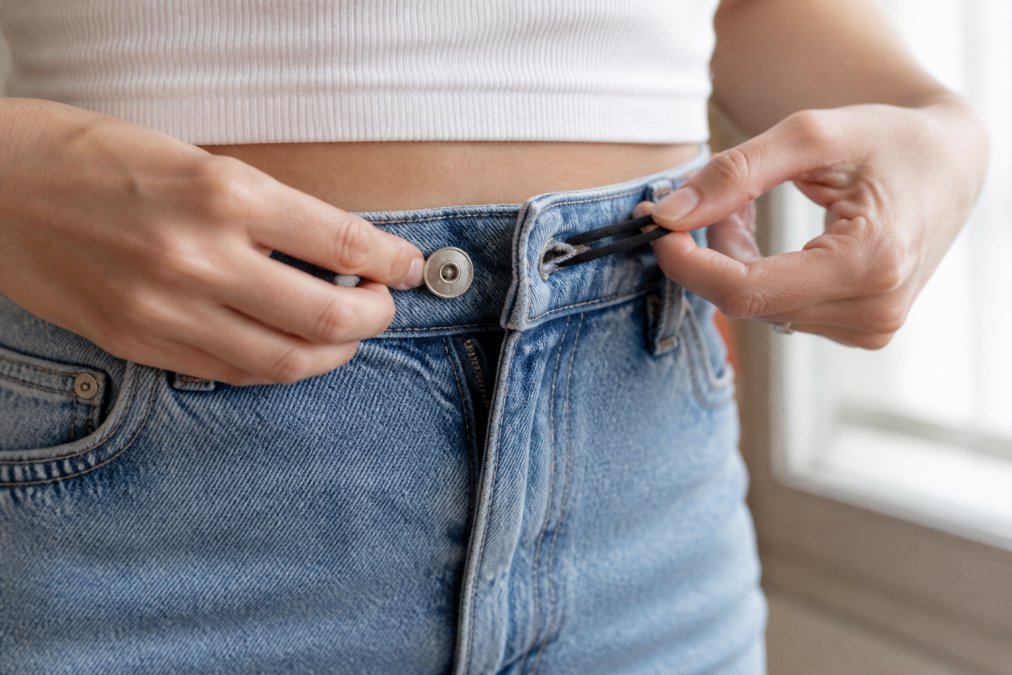
The Elastic Band Trick
Loop a thin elastic hair tie through your jeans' buttonhole, then bring both ends around the button and fasten it. This pulls the waistband tighter without damaging the fabric. It works best on jeans with a gap of up to an inch and hides completely under a shirt.
The trade-off: This method adds tension to the button and buttonhole, which can stress the seam over repeated use. It also doesn't address the root cause, the excess fabric at the back rise, so the gap may reappear after a few hours of wear as the elastic stretches.
The Waist Tightener Clip (The Underserved Option)
Unlike the elastic trick, a dedicated waist tightener is a purpose-built accessory designed to cinch the waistband without sewing or permanent damage. These are typically small, flat clips made of metal or high-strength plastic that hook onto the waistband on either side of the gap and pull them together with a hidden adjustable cord or buckle. They are available at most fabric and craft stores or online for under $10 for a multi-pack.
Why this is a superior temporary fix:
- Discreetness: They are designed to lie flat against the inside of the waistband, making them virtually invisible under a shirt.
- Adjustability: You can fine-tune the tension throughout the day as the denim stretches, something a bobby pin cannot do.
- Fabric Safety: Unlike a safety pin that pierces the fabric, these clips grip the seam allowance or the waistband's edge, leaving no holes or permanent marks.
The trade-off: They add a small amount of bulk at the back waist, which you may feel when sitting against a hard chair. They are also a temporary measure, they don't remove the excess fabric, so the fix is only as good as the clip's grip.
Bobby Pin and Button Adjustment
For a subtler approach, use a bobby pin to create a faux button loop. Push the pin through the fabric next to the existing button, then hook it over the button to draw the waistband closed. This buys you a snugger fit for a few hours, though you'll feel the pin against your skin.
The trade-off: This method is the least durable of the three. The pin can bend or pop out with movement, and the pressure point can cause discomfort. It is best reserved for a standing-only event where you won't be sitting for long periods.
Watch Out
These hacks are genuinely useful, but they're not a long-term strategy. They add fabric tension that can distort the denim over time, especially in stretch denim. If you find yourself relying on a clip or elastic every single day, that's a clear signal you need a permanent alteration or a better-fitting pair of jeans.
Sewing Solutions: How to Permanently Take In the Waistband
When you want a lasting fix, sewing is the reliable route. You'll need a seam ripper, needle and thread or a sewing machine, and about 30 minutes. The two most effective methods target different parts of the waistband. Before you start, always test your stitch on a hidden inside seam to ensure your needle can penetrate the denim and your thread color matches.
Adding Darts for a Custom Curve
Darts are folded, stitched tucks that remove excess fabric at a specific point. This is the best method for rigid denim (100% cotton) because it permanently removes fabric rather than just pulling it in.
Step-by-Step:
- Turn the jeans inside out. Put them on and pinch the fabric vertically at each side of the center back seam, right where the gap begins. The amount you pinch should equal the total width of the gap you want to close.
- Pin the excess fabric. Use safety pins to hold the fold in place. Take the jeans off and turn them right-side out to check the fit. The waistband should now sit flush against your lower back.
- Mark the dart. With the jeans still inside out, use tailor's chalk to draw a line from the top of the waistband down to a point about 2 to 3 inches below the waistband seam. The line should taper to a point, creating a triangle shape.
- Sew the dart. Using a straight stitch on your machine (or a strong backstitch by hand), sew from the top of the waistband down to the point of your chalk line. Backstitch at both ends to secure the thread.
- Press the dart. Iron the dart flat, pressing it toward the center back seam. This sets the stitch and prevents bulk.
Troubleshooting: If the dart creates a visible bump at the top of the waistband, you have taken in too much fabric. Remove the stitches and reduce the pinch by half. A common mistake is making the dart too long, which can create a pucker at the hip. Keep the dart short and tapered.
Sewing Elastic into the Waistband
For a more forgiving fit, this method is ideal for stretch denim that has loosened over the day. It adds a gentle, constant tension that pulls the waistband in without creating a rigid pinch.
Step-by-Step:
- Measure your gap. While wearing the jeans, measure the width of the gap at the center back. Cut a piece of 1/2-inch wide elastic to that exact length.
- Open the waistband. Use a seam ripper to carefully open a 2-inch section of the inside waistband seam, centered on the center back seam. You only need to open the inner lining, not the outer denim.
- Insert the elastic. Attach a safety pin to one end of the elastic and thread it through the opening, pushing it toward one side seam. Stitch the end of the elastic securely to the side seam allowance. Repeat for the other side, pulling the elastic taut so it lies flat against the inside of the waistband.
- Close the opening. Hand-stitch the opening closed with a blind stitch, or use a zipper foot on your machine to sew close to the edge.
Troubleshooting: The most common issue is the elastic twisting inside the channel. To prevent this, stitch the elastic down at the center back seam before closing the opening. If the elastic is too tight, you'll see the waistband pucker. If it's too loose, the gap will remain. Start with a piece of elastic that is half the width of your gap and adjust from there.
Key Takeaway
Which method should you choose? For rigid denim where you want a precise, permanent shape, use darts. For stretch denim that you want to remain comfortable through a full day of wear, use the elastic method. If you are unsure, the elastic method is more forgiving of mistakes.
Tailoring Jeans Waist Gap: When to See a Professional
If the thought of a seam ripper makes you nervous, or the gap is severe, a tailor is worth the cost. Tailoring jeans waist gap issues professionally typically runs far less than a new pair of premium jeans, and the result is a custom fit you can't buy off the rack.
A tailor can also address related issues like a sagging seat or excess fabric at the hips, not just the waist. They have the equipment to work with thick denim seams, which home sewing machines often struggle to penetrate. Bring the shoes you plan to wear, so the hem and waist adjustments work together.
The trade-off is time and money. If your jeans are inexpensive or nearing the end of their life, the alteration cost may exceed their value. For a quality pair you love, professional alterations extend their life considerably.
Fabric Matters: Stretch Denim vs. Rigid Denim
Your fabric choice influences both how much gapping occurs and how easy it is to fix. Stretch denim contains elastane, which molds to your body but also stretches out through the day, often making gapping worse by evening. Rigid denim, or 100% cotton, holds its shape but offers no forgiveness, so the fit has to be right from the start.
For stretch denim, a waist gap solution that includes elastic or a cinch works well, since it adds constant tension. For rigid denim, darts are more effective because they permanently remove fabric. Fabric care and construction guidance from Cotton Incorporated explains that cotton fibers behave differently under tension than synthetic blends, which is why alteration methods should match the material.
When shopping, check the fabric composition. A higher cotton percentage usually means a sturdier waistband that resists gapping, while a higher elastane percentage means you'll likely need a belt or an alteration.
Prevention: Choosing the Best Jeans for Curvy Figures
The simplest way to stop gapping is to buy jeans designed for your shape in the first place. The best jeans for curvy figures feature a contoured waistband that curves to follow your back, a higher back rise, and a waist-to-hip ratio cut for real proportions rather than a straight block.
At Urban Mode Wear Store, our pull-on denim options address this directly. The Women's Lightweight Pull-On Denim Jeans feature an elastic waistband that moves with you, eliminating the rigid waistband gap entirely. For a bolder look, the Beau Blue Floral Print Elastic Waist Pull On Casual Jeans offer the same no-gap comfort with a contemporary print. Each pair is crafted from premium materials for a flattering fit that prioritizes both style and function.


A quick checklist for shopping: look for a curved waistband, check the back rise measurement against your own, and favor styles with some stretch if you're between sizes. Sizing standards and body measurement resources from the National Institute of Standards and Technology can help you translate your measurements across different brands.
Conclusion: Get the Fit You Deserve
Jeans gapping is a common frustration, but it's solvable. Whether you choose a temporary hack, a sewing project, or a professional tailor, you don't have to settle for a waistband that doesn't fit. The real fix starts with understanding your measurements and choosing denim built for your shape.
The Urban Mode Wear Store collection offers premium materials, flattering fits for every curve, and plus-size friendly options. Explore our pull-on jeans and experience a waistband that stays put, so you can focus on expressing your style with confidence.
Frequently Asked Questions
Why do my jeans gap in the back when I sit down?
This happens when the jeans are cut for a straighter figure, but your waist-to-hip ratio is more curved. As you move, the fabric is pulled taut across the hips and seat, which forces the waistband to bow out in the back. It is a common fit issue for curvy body types, not a sign you need a smaller size.
Can a tailor fix a waist gap in jeans?
Yes, a tailor can fix a waist gap by taking in the waistband. This is a standard alteration. A professional will use darts or adjust the side seams to remove the excess fabric. This is the best solution for high-quality denim you plan to keep for years, as it provides a permanent, invisible fix.
What is the quickest no-sew way to fix a gapping waistband?
The quickest no-sew fix is the elastic band trick. Thread a hair tie or a piece of elastic through the buttonhole, then loop it back over the button. This pulls the waistband tighter instantly. For a more discreet look, use a bobby pin to hook the waistband to the button on the inside.
What is the best denim fit for curvy bodies to prevent gapping?
Look for jeans labeled as 'curvy fit' or 'high rise.' These styles are cut with a narrower waist and a wider hip and thigh area, which helps eliminate the back gap. Also, consider jeans with a bit of stretch, as they conform to your shape better than rigid denim.
Getting dressed should never require a compromise between comfort and style. Shop Urban Mode Wear Store today and find denim that fits your curves, not the other way around.