Cart
0
Last Updated: October 25, 2026
Quick Summary
Retail stores for women's clothing range from department stores like Macy's and Nordstrom offering broad selection and one-stop shopping, to specialty retailers like Ann Taylor and LOFT focused on professional wardrobes, to inclusive brands like Lane Bryant and Torrid serving extended sizing. The best store for your wardrobe depends on matching the retailer's size range, return policy, and physical-store access to how you actually shop.
- Department stores carry women's clothing from $20 for basics to $200+ for designer pieces with in-store alterations available
- Off-price retailers like T.J. Maxx and Marshalls sell branded clothing at 20-60% below department-store prices with weekly selection changes
- Workwear specialists such as Ann Taylor and LOFT offer tailored pieces starting around $80-$150 with petite and tall lengths in many styles
- Petite-specific retailers adjust inseams 2-3 inches shorter and sleeve lengths accordingly to create proper proportions for petite frames
- Online boutiques typically offer 30-day return windows, with some extending to 60 days, and many provide free returns
Table of Contents
- Top Retail Stores for Women's Clothing
-
Best Women's Clothing Stores for Every Style
- How this comparison was built
- Department stores: breadth and one-stop shopping
- Off-price and discount retailers: value with variability
- Specialty and mall retailers: trend and occasion focus
- Inclusive and size-specific retailers
- Workwear and professional retailers
- Outdoor and active retailers
- Quick comparison by use case
- Women's Workwear Stores for Professional Wardrobes
- Women's Online Boutiques: Shopping Beyond the Department Store
- Women's Petite Clothing Stores for Proper Fit and Length
- How to Choose the Right Retail Store for Your Wardrobe
- Start Building Your Wardrobe Today
- Frequently Asked Questions
Top Retail Stores for Women's Clothing
Finding the right retail stores for women's clothing means balancing style, fit, and value, whether you're shopping for professional wardrobes, everyday basics, or statement pieces. At Urban Mode Wear Store, we've curated pieces designed to help your personal style.
The challenge isn't finding options, but stores that deliver on three fronts: pieces that reflect your aesthetic, sizing that fits your body, and prices that don't require justification. This guide covers retail stores for women's clothing that excel in different ways.
Quick Comparison Table
| Store Type | Best For | Price Range | Key Strength |
|---|---|---|---|
| Fashion-forward boutiques | Bold, contemporary style | $25-$75 per piece | Curated selection, premium materials |
| Workwear specialists | Professional wardrobes | $40-$150 per piece | Tailored fit, business-appropriate designs |
| Online boutiques | Niche aesthetics | $30-$100 per piece | Unique finds, flexible sizing |
| Petite specialists | Proper proportions | $35-$120 per piece | Correct sleeve and hem lengths |
| Department stores | Variety and selection | $20-$200+ per piece | One-stop shopping, multiple brands |
Best Women's Clothing Stores for Every Style
The strongest retail stores for women's clothing aren't one-size-fits-all. Discover which fashion brands align with your aesthetic as you explore style-specific stores. Some win on breadth, others on curation, fit consistency, or inclusive sizing. The most useful comparison dimensions are selection depth, price band, size range, and in-person try-on.
How this comparison was built
Stores were grouped by the job they do best, using current online assortments, published size charts, store-locator coverage, and return-policy terms. Prices are starting points for core women's apparel and vary by category and season.
Department stores: breadth and one-stop shopping
Department stores remain the most reliable option when you need multiple categories in one trip. Macy's, Nordstrom, and Dillard's carry women's clothing from about $20 for basics to $200+ for designer pieces. You can try on dresses, jeans, and outerwear in one visit, and most locations offer alterations. The trade-off is overwhelming choice and inconsistent sizing across brands; Nordstrom's flexible return policy reduces online ordering risk.
Off-price and discount retailers: value with variability
T.J. Maxx, Marshalls, and Nordstrom Rack sell branded women's clothing at 20-60% below department-store prices. Selection changes weekly, so the same item is rarely restocked, best for shoppers who enjoy hunting and don't need a specific piece. Sizing runs are inconsistent. Shop in person when possible; online assortments are smaller and return windows can be shorter.
Specialty and mall retailers: trend and occasion focus
Retailers such as H&M, Zara, and American Eagle occupy the fast-fashion and trend tier, with tops and dresses commonly starting around $10-$30 and jeans around $40-$60. They excel at new arrivals and trend translation, and most have physical stores in regional malls. Quality and size consistency vary by line, so check the specific item's fabric content and size chart.
Inclusive and size-specific retailers
For extended sizing, Lane Bryant and Torrid focus on plus sizes, while Old Navy and Target offer broad size runs including plus and petite. Universal Standard is known for a wide size range and consistent sizing. These retailers are the strongest choice when standard sizing has repeatedly failed, because their blocks and grading are designed for specific bodies rather than scaled up from a single sample size.
Workwear and professional retailers
For office and business-casual wardrobes, Ann Taylor, LOFT, and Banana Republic specialize in tailored pieces, with blazers and trousers commonly starting around $80-$150. They offer petite and tall lengths in many styles and in-store tailoring at many locations, worth the higher price when you need pieces that hold up to weekly wear and fit correctly through the shoulder and waist.
Outdoor and active retailers
REI and L.L.Bean carry women's clothing built for travel and outdoor use, including rain shells, insulated jackets, and hiking pants. Technical outerwear typically starts around $80 and rises above $300 for premium shells. Staff can explain layering and fabric trade-offs, and generous return policies make them low-risk for fit-sensitive purchases.
Quick comparison by use case
| Store type | Best for | Typical starting price | Physical stores | Key strength |
|---|---|---|---|---|
| Department stores | One-stop shopping | $20+ | Yes, widespread | Multiple brands, alterations |
| Off-price retailers | Bargain hunting | $15+ | Yes, regional | Discounted brands, rotating stock |
| Specialty/trend retailers | New arrivals | $10-$30 tops | Yes, malls | Trend speed, low entry price |
| Inclusive retailers | Extended sizing | $25+ | Varies | Consistent fit across size range |
| Workwear retailers | Professional wardrobes | $80+ blazers | Yes, many | Tailoring, petite/tall lengths |
| Outdoor retailers | Travel and weather | $80+ outerwear | Yes, select | Technical fabrics, staff expertise |
Pro Tip
Before driving to a store, use the retailer's online store locator to confirm the location stocks women's apparel and offers returns in person. Not every mall format carries the full size range.
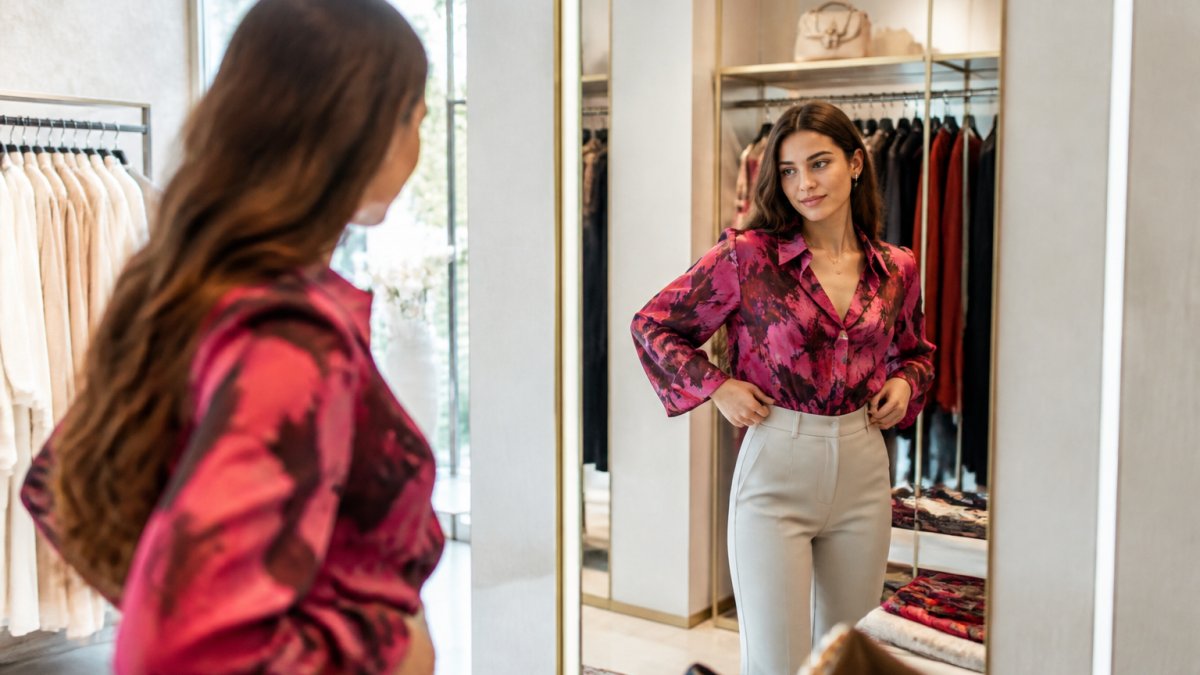
Women's Workwear Stores for Professional Wardrobes
Professional wardrobes demand pieces that work in the boardroom and transition into after-work settings.
Urban Mode Wear Store includes workwear essentials designed for this exact purpose. The Women's Business Suit Jacket at $46.80 comes in six colors (green, white, black, red, dark blue, blue) and sizes from S to 3XL.
Pair workwear jackets with tailored pieces. The Women's Jess Button Flare Light Blue Jeans at $59.00 offers ultra-high rise construction and moderate stretch in a range from size 1 to 3X.
What separates workwear specialists from general retailers: they understand that professional clothing needs to move with your body, not against it. When a store prioritizes these details, your professional wardrobe becomes an investment, not an expense. Build a professional wardrobe that works across your week by understanding which pieces actually transition between contexts.
Women's Online Boutiques: Shopping Beyond the Department Store
Online boutiques offer something department stores rarely do: curation. Instead of 500 options that leave you paralyzed, a focused boutique presents 50 pieces selected for quality, design, and wearability.
The advantage of online boutiques is flexibility: you can browse without time pressure, and return policies tend to be generous, with many offering free returns, which matters when ordering without trying on.
Urban Mode Wear Store functions as an online boutique with a clear point of view. We stock pieces that work for multiple occasions, the Sakkas Katty Floral Print Women's Boho Maxi Dress at $62.99 works for casual beach days or dressed up with heels for events.

The trade-off with online boutiques: you can't try before buying, which is why return policies matter.
Women's Petite Clothing Stores for Proper Fit and Length
Petite sizing isn't just about smaller numbers, it's about proportions. A petite woman wearing standard sizing often finds sleeves that swallow her wrists, hems that drag on the floor, and torsos that overwhelm her frame.
Petite-specific retail stores for women's clothing solve this by adjusting inseams, sleeve lengths, and overall proportions. Inseams typically drop 2-3 inches compared to standard sizing, and sleeve lengths shorten accordingly.
Get Summer Ready with Sakkas Eli Women's Floral Ruffle Top Blouse Tunic →
Urban Mode Wear Store designs pieces that work across body types, including petite frames. The Sakkas Ahaana Women Renaissance Boho Rayon Maxi Embroidered Paneled Summer Skirt at $54.99 comes in S/M and L/XL with consistent 38-inch length from center back.

When shopping petite collections, pay attention to rise measurements on jeans and pants. Learn how to style professional outfits that work across your wardrobe. Petite-specific brands adjust rise heights downward, typically 0.5-1 inch lower, which changes how pants drape. Learn how to find consistent sizing across stores so you can order confidently.
How to Choose the Right Retail Store for Your Wardrobe
Choosing among retail stores for women's clothing is easier when you evaluate stores on decision factors rather than style alone: fit consistency, size range, return terms, physical-store access, and price band. Here's a practical framework for any retailer, online or in person.
1. Match the store to your primary use case
Start with the job the clothing needs to do. Workwear shoppers should prioritize tailored fits, petite and tall lengths, and in-store alterations. Travel shoppers should look for wrinkle-resistant fabrics and layering pieces. Occasion shoppers benefit from broad dress selections and easy returns. Basics shoppers should focus on fabric weight and wash durability rather than trend.
2. Check size range and fit consistency
Look for a published size chart with body measurements, not just letter sizes, and compare your bust, waist, and hip measurements to each retailer's chart, a size 8 at one store can fit like a 10 at another. Retailers that grade patterns across a wide range, such as those offering petite, tall, and plus in the same style, tend to deliver more predictable fit.
3. Read the return and exchange policy before ordering
Return terms are a decision factor, not a footnote. Check the return window, whether returns are free, whether original tags are required, and whether in-store returns are accepted for online orders. A 30-day window is common; some offer 60 days or more. Retailers with physical stores often let you return online purchases in person, avoiding shipping costs and speeding up exchanges.
4. Confirm physical-store availability
Verify that a location near you stocks women's clothing and the category you need. Use the retailer's store locator and filter by services such as alterations, in-store pickup, or plus-size inventory. Mall-based specialty stores may carry a narrower size run than the flagship or online store, so calling ahead for a specific size or style saves a trip.
5. Compare price bands and what they buy
Price tiers signal construction and materials more reliably than brand names. Fast-fashion tops often start around $10-$30, mid-tier workwear blazers around $80-$150, and technical outerwear around $80-$300. Higher prices don't guarantee better fit, but they often correspond to more consistent sizing, better fabric, and services such as alterations. Set a budget per category and compare what each tier includes.
6. Use a test purchase
When trying a new retailer, order one or two core pieces rather than a full wardrobe. Evaluate fit, fabric, and how the item holds up after one wash. If the fit works, note the size and style for future orders; if not, the return process itself tells you whether the retailer is worth repeat business.
Key Takeaway
The best retail store for your wardrobe is the one whose size range, return terms, and store access match how you actually shop. Compare on those factors first, then choose styles.
consumer guidance on apparel purchasing and returns
Start Building Your Wardrobe Today
Start with one piece. The Get Summer Ready with Sakkas Eli Women's Floral Ruffle Top Blouse Tunic at $39.99 works with jeans or dressed up with trousers. The Women's Stand-up Collar Jumpsuit With Pockets at $56.65 handles multiple seasons and occasions.

Add to cart and see how it fits your life. Our pieces are crafted to help your confidence and enable unique self-expression.
Related Reading:
According to consumer research on apparel purchasing behavior, fit consistency and return policies rank among the top factors influencing repeat purchases at clothing retailers.
Many women find that style guides on building professional wardrobes emphasize the importance of starting with quality basics before adding trend pieces.
Textile research on fabric durability and care shows that proper material composition and care instructions significantly extend garment lifespan compared to fast-fashion alternatives.
Frequently Asked Questions
What should I look for in a retail store for women's clothing?
Look for stores that offer a range of sizes, quality materials, and a clear return policy. Check whether the store carries your preferred style categories, dresses, jeans, tops, workwear, and whether sizing is consistent across items. Read customer reviews about fit and durability, and verify that the store's price point matches your budget. Many shoppers prioritize stores with detailed size charts and fit guarantees to avoid ordering mistakes online.
Are women's online boutiques better than traditional retail stores?
Both have advantages. Online boutiques often offer curated, trend-forward selections and competitive pricing, while traditional retail lets you try items on immediately. Online boutiques typically have lower overhead costs, which can mean better prices on quality pieces. However, you'll need accurate sizing information and a hassle-free return policy. Many shoppers use both: online for discovery and specific pieces, in-store for trying on basics and workwear.
How do I find women's workwear stores that fit my body type?
Search for retailers that specifically market workwear collections and offer extended size ranges, including plus sizes. Look at their return policies and read reviews mentioning fit consistency across different pieces. Many workwear stores provide detailed measurements and styling guides. Urban Mode Wear Store, for example, offers professional pieces like business suit jackets and versatile tops designed to flatter every curve.
Where can I shop for petite women's clothing without excessive tailoring?
Women's petite clothing stores design pieces specifically for shorter frames, with proportional sleeve lengths, shorter rises on pants, and adjusted dress lengths. These retailers understand that standard sizing often leaves petite shoppers with excess fabric. Check product descriptions for petite-specific sizing options, and look for stores that offer free or discounted hemming services. Many online boutiques now carry petite lines alongside standard sizes, making it easier to find flattering fits without major alterations.
What makes a retail store's sizing consistent, and why does it matter?
Consistent sizing means that a size 10 in one item fits the same way as a size 10 in another. It matters because it reduces return rates and frustration when ordering online. Stores achieve this by sourcing from fewer manufacturers or working with suppliers who follow strict specifications. Reading customer reviews about fit consistency helps you decide whether to trust a store's sizing chart. Quality retailers often publish detailed measurements and fit notes for each item to help you choose the right size on the first try.