Cart
0
Table of Contents
- Understanding Your Plus Size Body Shape
- How to Measure for Plus Size Clothing That Fits
- Choose Fabrics and Structures That Flatter Your Silhouette
- Master Tailoring and Alterations for the Perfect Fit
- Styling Techniques to Emphasize Your Best Features
- Build a Plus Size Capsule Wardrobe with Essential Pieces
- Shopping Smart for Flattering Plus Size Clothing
- Frequently Asked Questions
Understanding Your Plus Size Body Shape
The foundation of finding flattering plus size clothing starts with understanding your unique body shape and proportions. Every body is different, and recognizing your silhouette helps you make informed choices about what styles will work best for you.
Plus size body shapes typically fall into categories like pear, apple, hourglass, rectangle, and inverted triangle. Knowing where you land matters because it shapes every decision you make about fit, fabric, and styling. For example, an hourglass silhouette benefits from waist definition, while a rectangle shape may need visual interest created through layering or texture.
Take time to look at yourself in a full-length mirror and identify where you carry weight, where you have natural curves, and which areas you want to emphasize or balance. This isn't about judgment, it's about strategy.
Pro TipStand sideways in front of a mirror and notice your natural curves. Your silhouette tells you where to focus your styling efforts. This single observation saves hours of trial-and-error shopping.
How to Measure for Plus Size Clothing That Fits
Accurate measurements are non-negotiable when shopping for flattering plus size clothing, especially when buying online. Most fit issues stem from guessing rather than measuring.
Measure yourself in soft, stretchy clothing (like a t-shirt and leggings) using a soft measuring tape. Take measurements at your bust, waist, hip, and inseam. Write them down and compare them against each brand's size chart before ordering. Many plus size retailers grade their sizes differently, so the same numerical size can fit completely differently between brands.
Pay special attention to waist measurement, as this is where most gapping occurs. If you're between sizes, consider your proportions: do you have a defined waist or a straighter silhouette? A defined waist often means sizing up in the hip and down in the waist works better, while a straighter shape may benefit from consistent sizing.
Keep a personal measurement record and note which brands fit your measurements best. Over time, you'll develop a mental map of which retailers' grading matches your body.
Key TakeawayConsistent measurements across multiple attempts ensure accuracy. Measure twice, record once, and keep that reference sheet handy for every shopping session.
Choose Fabrics and Structures That Flatter Your Silhouette
Fabric choice dramatically affects how clothing drapes on your body and whether it emphasizes or minimizes areas. The right fabric can transform an ordinary piece into something that flatters your specific proportions.
Natural fabrics like cotton blends, linen, and quality knits offer better drape than cheap synthetics. They move with your body instead of clinging or pulling. Stretch factor matters too, a fabric with 5-10% stretch moves with you without losing its shape, while zero-stretch fabrics can feel restrictive or create unwanted emphasis (aatcc.org).
Structure is equally important. Structured fabrics hold their shape and create clean lines, which flatters most body types. Shirring (the gathered fabric technique) strategically placed can create visual interest without bulk. A fit-and-flare silhouette with a defined waist works beautifully for many plus size figures because it emphasizes curves rather than hiding them.
Avoid thin, clingy fabrics that show every contour if that's not your goal. Instead, choose fabrics with enough body to skim your shape while maintaining visual balance. Monochromatic pieces in structured fabrics create a longer, leaner line.
Master Tailoring and Alterations for the Perfect Fit
Even the best piece off the rack rarely fits perfectly. Strategic tailoring and alterations transform good-fitting clothes into pieces that look custom-made for your body. However, professional tailoring costs $15-$75 per alteration, making it inaccessible for many shoppers building a wardrobe on a budget (peer-reviewed research).
Professional Alterations That Deliver the Most Value
Common alterations include hemming, taking in seams at the side or back, and adjusting sleeve length. For plus size clothing, waist adjustments are particularly valuable, a tailor can take in excess fabric at the side seams to eliminate gapping while maintaining the garment's original design. Neckline adjustments and dart placement can also change how a piece sits on your frame. Prioritize alterations on investment pieces (blazers, trousers, structured dresses) where the cost-to-wear ratio justifies professional work.
Budget-Friendly DIY Tailoring Hacks
Simple fixes require no tailoring investment and can be done at home with minimal tools:
- Hand-sewing a temporary waistband adjustment: Using a needle and thread, create a small pleat or dart at the side seam (inside the garment) to take in 0.5-1 inch of excess fabric. This works best on knit fabrics and takes 15-20 minutes. Test the fit before making permanent stitches.
- Fashion tape for instant shaping: Double-sided fashion tape (available at drugstores) adheres fabric to skin or to itself, creating temporary waist definition or preventing gapping at the bust. It lasts through a full day of wear and leaves no residue on quality fabrics.
- Strategic belting: A wide belt (2-3 inches) worn at your natural waist instantly defines your silhouette and hides minor fit issues. Leather, fabric, or elastic belts work; choose one that complements your outfit's color palette.
- Elastic waistband adjustment: If trousers or skirts gap at the waist, thread elastic through the existing waistband casing using a safety pin. Pull the elastic to your desired tightness, knot the ends, and trim excess. This takes 10 minutes and costs under $2.
- Temporary hemming with fabric glue: Fabric glue (like Aleene's Tacky Glue) creates a temporary hem without sewing. Apply a thin line along the fold, press for 30 seconds, and let dry for 24 hours. It holds through multiple washes and can be removed by soaking in warm water.
- Seam tape for gaping necklines: Iron-on seam tape can be applied to the inside of a neckline to prevent stretching or gaping. This is especially useful for v-necks and scoop necks that shift during wear.
Finding a Tailor Who Understands Plus Size Fit
When professional alterations make sense, find a tailor who specializes in or has experience with plus size garments. They should ask questions about how you want the garment to sit and work with you to achieve that vision. A good tailor understands that plus size bodies have different proportions than straight-size bodies, longer torsos, different hip-to-waist ratios, and varying arm lengths, and adjusts their approach accordingly.
A quality tailor is worth the investment because they extend the life of your wardrobe and ensure pieces fit your body, not a theoretical size. For ongoing relationships, ask about package pricing to reduce costs.
Watch OutAvoid tailors who make assumptions about your body or suggest alterations that fundamentally change a garment's design. A quality tailor listens to your preferences and explains how alterations will change the garment's appearance and fit.
Styling Techniques to Emphasize Your Best Features
Strategic styling creates visual balance and draws attention to features you want to highlight. This goes beyond choosing the right size, it's about intentional placement and proportion.
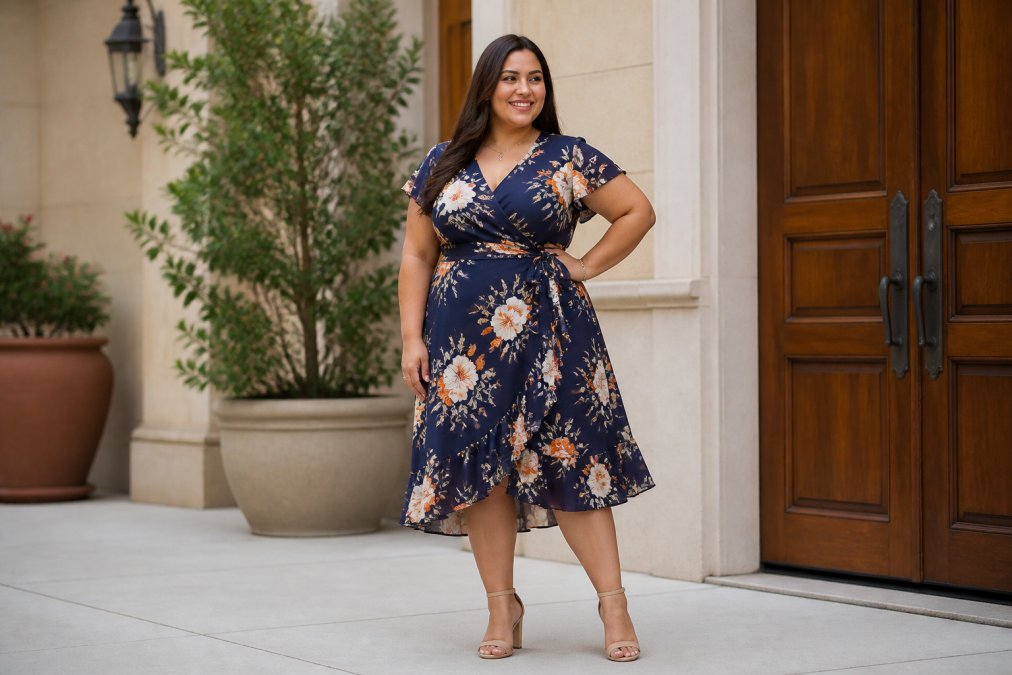
Vertical lines created through open cardigans, long necklaces, or vertical seaming elongate your frame. Layering adds dimension and allows you to control which areas you emphasize. A well-placed belt at your natural waist creates definition and breaks up your silhouette into balanced proportions.
Neckline choice matters significantly. Scoop necks and v-necks elongate the neck and chest area, while boat necks create a wider shoulder line. Asymmetrical necklines add visual interest and movement. Experiment with different neckline styles to see which feels most confident on your body.
Color blocking and texture variation draw the eye strategically. Placing a darker color on areas you want to minimize and lighter colors or patterns on areas you want to emphasize creates visual balance without hiding your shape.
Build a Plus Size Capsule Wardrobe with Essential Pieces
A capsule wardrobe of essential pieces eliminates decision fatigue and ensures every item works for both professional and social settings. Start with neutral basics that form your foundation.
Essential pieces include well-fitting dark jeans, neutral trousers in black or navy, white and black basic tees, and a structured white button-up shirt. Add layering pieces like cardigans and blazers that work across seasons. Include 2-3 neutral dresses that transition from office to evening with simple accessory changes.
Build your capsule around colors that make you feel confident. If jewel tones energize you, incorporate emerald, sapphire, or ruby pieces. If neutrals feel more professional, stick with blacks, navies, grays, and creams. The goal is pieces you actually wear because they make you feel good.
Quality matters more than quantity in a capsule wardrobe. Five pieces you love and wear constantly beat twenty pieces you tolerate. Premium materials and timeless designs ensure your investment pieces remain relevant across seasons and trends.
Shopping Smart for Flattering Plus Size Clothing
Successful shopping requires strategy, patience, and emotional awareness. Many plus size shoppers experience anxiety in fitting rooms, body dysmorphia when sizes fluctuate, or decision paralysis when faced with limited options. Acknowledging these challenges and building a shopping approach that accounts for them transforms the experience from frustrating to empowering.
Prepare Before You Shop
Start by knowing your measurements and preferred fit profile before browsing. This prevents impulse purchases that don't fit your body or lifestyle. Keep a personal measurement record and note which brands fit your measurements best. Over time, you'll develop a mental map of which retailers' grading matches your body. Write down three to five brands that consistently fit well, and prioritize shopping from them first.
Navigate Sizing Fluctuations with Confidence
Plus size bodies often fluctuate due to hormonal cycles, stress, medication, or seasonal changes. Rather than viewing size changes as failure, treat them as information. Keep pieces in two consecutive sizes if budget allows, for example, size 18 and 20, so you always have options that fit well regardless of minor fluctuations. This prevents the shame spiral of "nothing fits" and keeps your wardrobe functional year-round.
When shopping online, note the size you typically wear in each brand and order that size first. If it doesn't fit, exchange for the adjacent size rather than assuming your body is "wrong." Grading inconsistencies are common; a size 20 at one brand may fit like a size 18 or 22 at another.
Use Reviews Strategically
Read detailed product reviews from other plus size shoppers. They provide honest feedback about fit consistency, fabric quality, and whether pieces run true to size. Pay special attention to reviews from people with your body shape, their experience is more relevant than generic feedback. Look for reviewers who mention specific measurements ("I'm 5'8", 250 lbs, size 20") and compare their proportions to yours.
Be wary of reviews that say "runs small" or "runs large" without context. A piece might run small in the bust but large in the hip, or fit differently depending on fabric blend. Detailed reviews that describe how a piece fits across multiple areas of the body are more useful than one-word assessments.
Assess Fit Honestly in a Low-Pressure Environment
Try pieces on at home if possible and assess the fit without judgment. Does the fabric drape well? Do seams sit where they should? Does it feel comfortable for a full day of wear? If the answer to any of these is no, return it. Many retailers offer free returns, so use that benefit to test pieces in your own space rather than under fluorescent fitting room lights that distort perception.
If you experience anxiety in fitting rooms, shop online or visit stores during off-peak hours (weekday mornings) when fitting rooms are less crowded and you have more privacy. Some retailers offer private fitting room appointments; ask if this option is available.
Prioritize Brands That Design for Plus Size, Not Scale
Look for brands that prioritize plus size fit rather than simply scaling up smaller sizes. Brands that grade their patterns specifically for plus size proportions, with adjusted waist-to-hip ratios, longer torsos, and proportional sleeve lengths, fit better than generic scaled-up versions. These brands typically state their design philosophy on their website or in size guides.
Brands that offer extended size ranges (typically 14-32 or 16-34) often have better grading than brands that add plus sizes as an afterthought. Specialty plus size retailers invest in fit research and pattern development because their entire business depends on it.
Build a Shopping List, Not a Wishlist
Before each shopping session, identify specific gaps in your wardrobe. Do you need a structured blazer? A pair of trousers that fit your hip-to-waist ratio? A dress for a specific occasion? Shopping with intention prevents decision fatigue and reduces the likelihood of purchasing pieces that don't serve your actual life. Avoid browsing "new arrivals" or "trending" sections; instead, search for specific items you've identified as needs.
Pro TipSet a "cooling-off period" for online purchases over $50. Add items to your cart, close the browser, and return 24 hours later. If you still want the piece, proceed with checkout. This prevents impulse purchases driven by FOMO or emotional shopping.
=== FAQ ANSWERS (ARTICLE CONTENT, AUDIT EACH ONE SEPARATELY, SAME RULES) ===
Frequently Asked Questions
What fabric qualities matter most when shopping for flattering plus size clothing?
Look for fabrics with structure and moderate stretch—cotton blends, ponte knits, and quality denim hold their shape and support your silhouette without clinging or sagging. Avoid overly thin fabrics that cling to every contour or stiff materials that create bulk. Fabric drape is equally important; fabrics that flow smoothly over curves rather than bunch or wrinkle will create a more polished appearance. Check fabric content labels and feel samples when possible to understand how each material will move with your body.
How do I determine my true size across different plus size brands?
Measure your bust, waist, and hip at their fullest points using a soft tape measure, then compare your measurements to each brand's size chart rather than relying on numbered sizes. Sizes vary significantly across brands due to differences in garment grading standards. Keep detailed notes of which sizes fit best at each brand you shop from, and always check the specific size chart before ordering. Many retailers also offer detailed fit guides or customer reviews that mention how pieces run; use these insights to make informed decisions about sizing.
What are the most flattering clothing silhouettes for plus size bodies?
Wrap dresses, fit-and-flare styles, and pieces with waist definition create visual balance by emphasizing your proportions. A-line cuts and structured fabrics that skim rather than cling work well for many body shapes. Monochromatic outfits and vertical lines create elongating effects, while strategic layering adds dimension without bulk. The key is choosing silhouettes that align with your specific body shape and the features you want to emphasize, rather than following one-size-fits-all rules.
How can I avoid looking frumpy when dressing plus size?
Focus on fit consistency—ensure undergarments provide proper support and smooth lines, then choose pieces that follow your body's natural contours without excess fabric. Invest in tailoring to eliminate gapping at the waist, excess fabric at hips, or hemlines that hit unflattering spots. Select quality fabrics with good drape and structure, and use styling techniques like belting, layering, and neckline choices to create visual interest. Avoid shapeless oversized pieces or fabrics that add volume; instead, opt for garments that balance proportion with comfort.
This article was written using GrandRanker