Cart
0
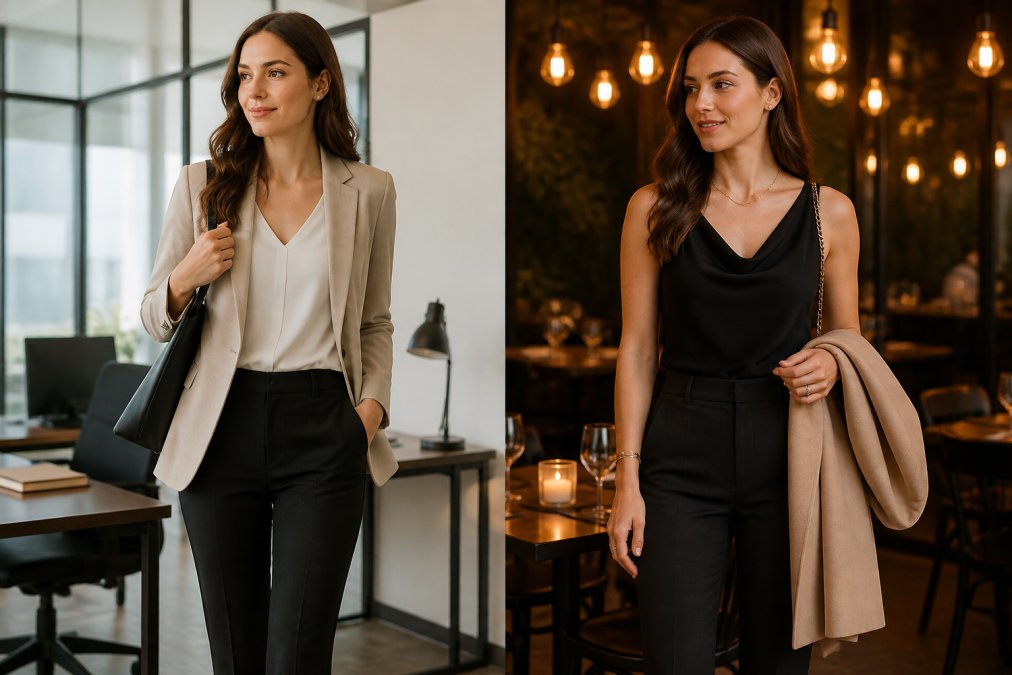
Table of Contents
- What You'll Need for a Smooth Office-to-Evening Transition
- Step 1: Start with Versatile Work Wardrobe Essentials
- Step 2: Master Layering Techniques for Day-to-Night
- Step 3: Swap Accessories for Instant Evening Elegance
- Step 4: Transform Your Footwear from Office to Evening
- Step 5: How to Style a Jumpsuit for Evening
- Step 6: Day to Night Outfit Ideas for Every Dress Code
- Common Mistakes to Avoid When Transitioning Office Wear to Evening
- Frequently Asked Questions
Last Updated: September 24, 2026
What You'll Need for a Smooth Office-to-Evening Transition
Transitioning office wear to evening means reshaping the outfit you already have on so it reads as social, not corporate, without a full change of clothes. At Urban Mode Wear Store, we build wardrobes around that idea: pieces that work at 9 a.m. and hold their own at 9 p.m.
The approach rests on one principle: evening style is not a different outfit, it is the same outfit with the signals flipped.
Here is what to keep on hand, at your desk or in your bag:
- A structured blazer or tailored layer you can remove or add
- One statement accessory, such as bold earrings or a cuff
- A clutch or small bag that replaces your work tote
- Strappy sandals or dressier flats
- A matte lipstick or deeper eye shade for a quick makeup shift
- A lint roller and a travel steamer for quick touch-ups
That kit takes less space than a lunch bag and removes the panic of a last-minute invitation.
Step 1: Start with Versatile Work Wardrobe Essentials
Build the base first. The best day-to-night outfits start with versatile basics that already lean slightly dressy.
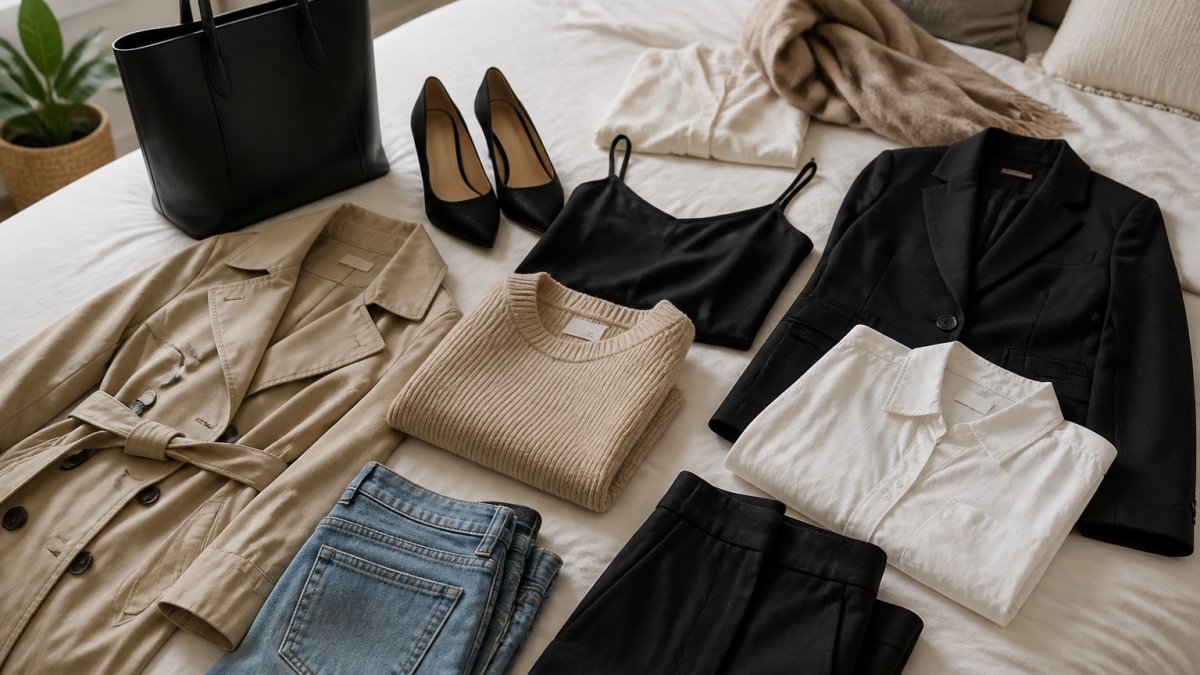
Think sheath dresses, midi dresses, and wide-leg trousers in a tight color palette. Black, navy, cream, and charcoal mix without effort. A tailored blazer pulls any of them into office-appropriate shape.
Fabric matters more than cut: a breathable polyester blend drapes cleanly and resists wrinkles through a long day, while stiff cotton creases by noon and reads tired by dinner.
Step 2: Master Layering Techniques for Day-to-Night
Layering is the fastest transformation tool you own, shifting one outfit from professional attire to evening elegance in seconds, and it solves the seasonal problem most guides ignore.
The three-layer rule
Build every transition outfit in three layers, not two:
- Base layer, the piece that stays on all night. A sheath dress, silk shell, or fine-knit top.
- Structure layer, the piece that reads corporate. A blazer, longline vest, or tailored cardigan.
- Signal layer, the piece that flips the outfit to evening. A leather jacket, metallic belt, or statement scarf.
The base never changes. You only remove the structure layer and add the signal layer. That is the entire mechanism, and it works because evening style is about signal, not coverage.
Fabric mechanics that decide whether layering works
Layering fails when fabrics fight each other. Two rules keep it clean:
- Thin over thick, never thick over thin. A fine merino turtleneck under a wool blazer drapes; a chunky knit under the same blazer bunches at the shoulders and reads sloppy by dinner.
- Match the sheen to the hour. Matte layers read daytime. One layer with sheen, silk, satin, a metallic thread, reads evening. Two sheen layers compete.
Seasonal transitions: winter office to summer evening
The same three-layer system handles extreme weather if you swap the structure layer by season:
- Cold office, warm evening: Keep a lightweight blazer at your desk and a packable shell in your bag. Remove the blazer for the walk, add it back for the air-conditioned restaurant.
- Warm office, cool evening: Reverse it. A sleeveless base plus a longline vest for the office, then swap the vest for a leather jacket or a wrap for the night.
- Transitional months: A fine-knit cardigan is the most useful structure layer you own. It is light enough for a warm office and warm enough for a cool patio.
Three layering moves that work every time:
- Blazer on for meetings, off for drinks
- A fine-knit turtleneck under a sleeveless dress in cooler months
- A longline vest over a midi dress for a modern, minimalist look
Pro Tip
Steam your blazer the night before, not the morning of. Creases set overnight, and a two-minute steam at night saves ten minutes of ironing when you are already running late.
Key Takeaway
Keep the base, remove the structure, add the signal. That single sequence handles both the day-to-night shift and the seasonal shift, which is why it belongs at the center of your transition routine.
Step 3: Swap Accessories for Instant Evening Elegance
Accessories do more work than any other part of the outfit: a single swap can take a look from office to evening in under a minute.
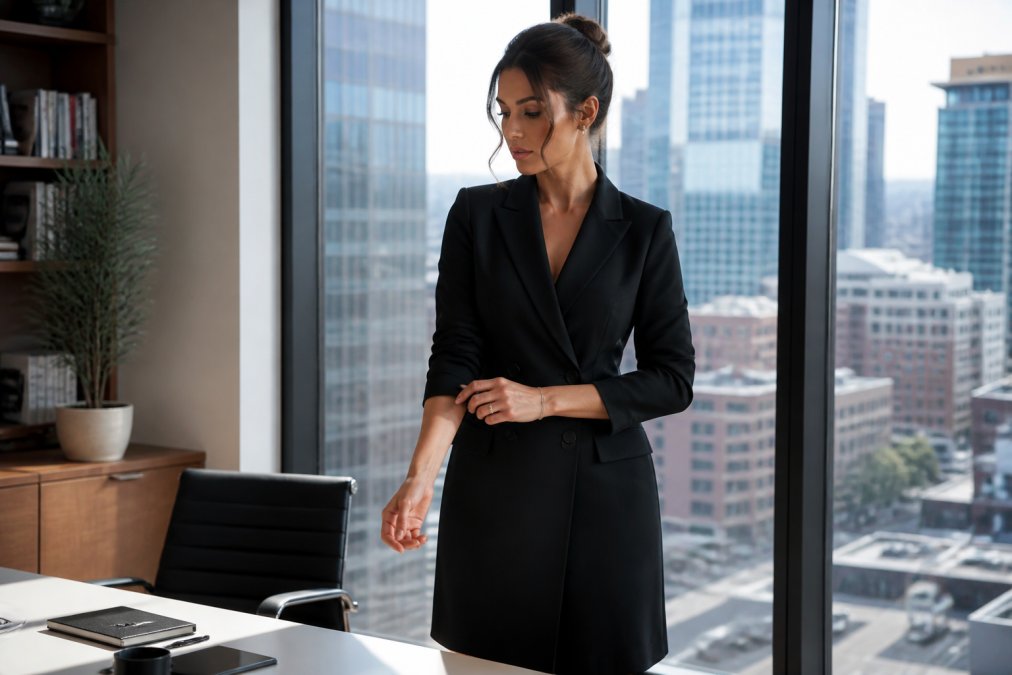
Chic Double Breasted Blazer Dress for →
| Daytime Accessory | Evening Swap | Effect |
|---|---|---|
| Structured tote | Metallic clutch | Hands-free to polished |
| Stud earrings | Statement drops | Adds drama |
| Thin leather belt | Metallic or chain belt | Defines the waist |
| Plain watch | Cuff or bangle stack | Adds shine |
| Sheer tights | Bare legs or fine sheers | Lightens the look |
Step 4: Transform Your Footwear from Office to Evening
Footwear is where most transitions fail: comfortable office shoes look sensible, and sensible reads flat at night.
Step 5: How to Style a Jumpsuit for Evening
A jumpsuit is the most underrated piece for transitioning office wear to evening. It reads as one clean line, which flatters every silhouette.
Step 6: Day to Night Outfit Ideas for Every Dress Code
The right day to night outfit ideas depend on where you are going. Dress codes are about signals, not formality levels, once you know which signals a venue rewards, you can build the outfit from pieces you already own.
How to read a dress code in 30 seconds
Ask three questions before you leave the office:
- What is the lighting? Dim, warm lighting rewards sheen, metallics, and deeper colors. Bright overhead lighting rewards clean lines and matte fabrics.
- What is the seating? Bar stools and standing events reward a defined waist and a shorter hem. Booths and seated dinners reward drape and a longer line.
- What is the noise level? Loud, crowded venues reward one bold accessory. Quiet venues reward subtle detail.
Those three answers tell you more than the words on the invitation.
Four transitions that cover most situations
Business casual to dinner: Wide-leg trousers, a silk blouse, and a blazer. Drop the blazer, add a clutch and statement earrings, the silk blouse is the signal layer, already reading evening under warm light.
Shopping your own closet for transition pieces
You do not need a second wardrobe. Most closets already contain the pieces that do the transition work, they are just filed under the wrong category. Look for:
- A metallic belt you wear to brunch. It is the fastest way to define a waist over a plain dress.
- A clutch from a wedding or a formal event. It replaces the work tote in one move.
- Statement earrings you save for special occasions. They are the single highest-impact swap you own.
- A leather jacket from weekends. It reads evening over a sheath dress and casual over denim.
- A silk scarf you never wear. Tied at the neck or on a bag handle, it adds the sheen evening lighting rewards.
Match the outfit to the venue, not the other way around
A look that works for a casual dinner will read underdressed at a formal event. The base layer can stay the same all week; only the signal layer changes. Build the kit once, and every dress code becomes a variation on a theme you already know.
Watch Out
Do not rely on a single "transition" outfit for every event. The base layer is reusable, but the signal layer must change with the venue. A metallic belt that works at a cocktail bar will look out of place at a seated formal dinner.
Common Mistakes to Avoid When Transitioning Office Wear to Evening
Other traps to skip:
- Too many statement pieces. One bold item is enough.
- Ignoring the season. A heavy blazer works in winter and looks wrong in July. Plan seasonal transitions with lighter layers.
- Forgetting the bag. A work tote kills an otherwise polished evening look.
- Skipping the mirror check. Evening lighting is dimmer. Check your outfit in warm light before you leave.
- Buying fast fashion for a look you wear twice. Durable materials cost more up front and last for years.
Watch Out
Do not rely on a single "transition" outfit for every event. A look that works for a casual dinner will read underdressed at a formal event. Match the outfit to the dress code, not the other way around.
A capsule approach solves most of this. When every piece in your closet already works with the others, the transition takes minutes. Urban Mode Wear Store builds its collection around that idea, with premium materials and flattering fits for every curve, including plus size options. Our plus size fit guidance from the CDC's body measurement data reflects the same principle: fit first, style second.

Frequently Asked Questions
What should I wear to an evening work event?
Start with a versatile base like a blazer dress or tailored trousers and a silk blouse. Swap daytime accessories for evening ones: a clutch instead of a tote, statement jewelry, and strappy sandals or heels. Add a bold lip color. This keeps you office-appropriate while transitioning office wear to evening seamlessly. Urban Mode Wear's Chic Double Breasted Blazer Dress ($66.42) works perfectly for this.
How do you transition a blazer from day to night?
A blazer is a powerhouse for office to evening. During the day, pair it with tailored trousers and a button-down. For evening, swap the shirt for a silk camisole, change trousers to a midi skirt or dark jeans, and add strappy heels and a clutch. The Single-Breasted Plaid Blazer and Skirt Set ($99.99) can be worn together for work, then the blazer alone with jeans for a night out.
What are the best versatile pieces for a day-to-night wardrobe?
Focus on versatile work wardrobe essentials: a little black dress, a tailored blazer, wide-leg trousers, a silk blouse, and a jumpsuit. These pieces can be styled up or down with accessories. For example, the Women's Work Blazer Dress ($39.00) works for meetings and evening events. A jumpsuit can go from office to evening with a change of shoes and jewelry.
How can accessories change the look of a work outfit?
Accessories are the fastest way to shift from professional to evening elegance. Swap a structured tote for a clutch, replace stud earrings with statement jewelry, and change flat shoes to strappy sandals. Add a belt or scarf to redefine your silhouette. These small swaps transform your office wear into evening-ready looks without changing your entire outfit.